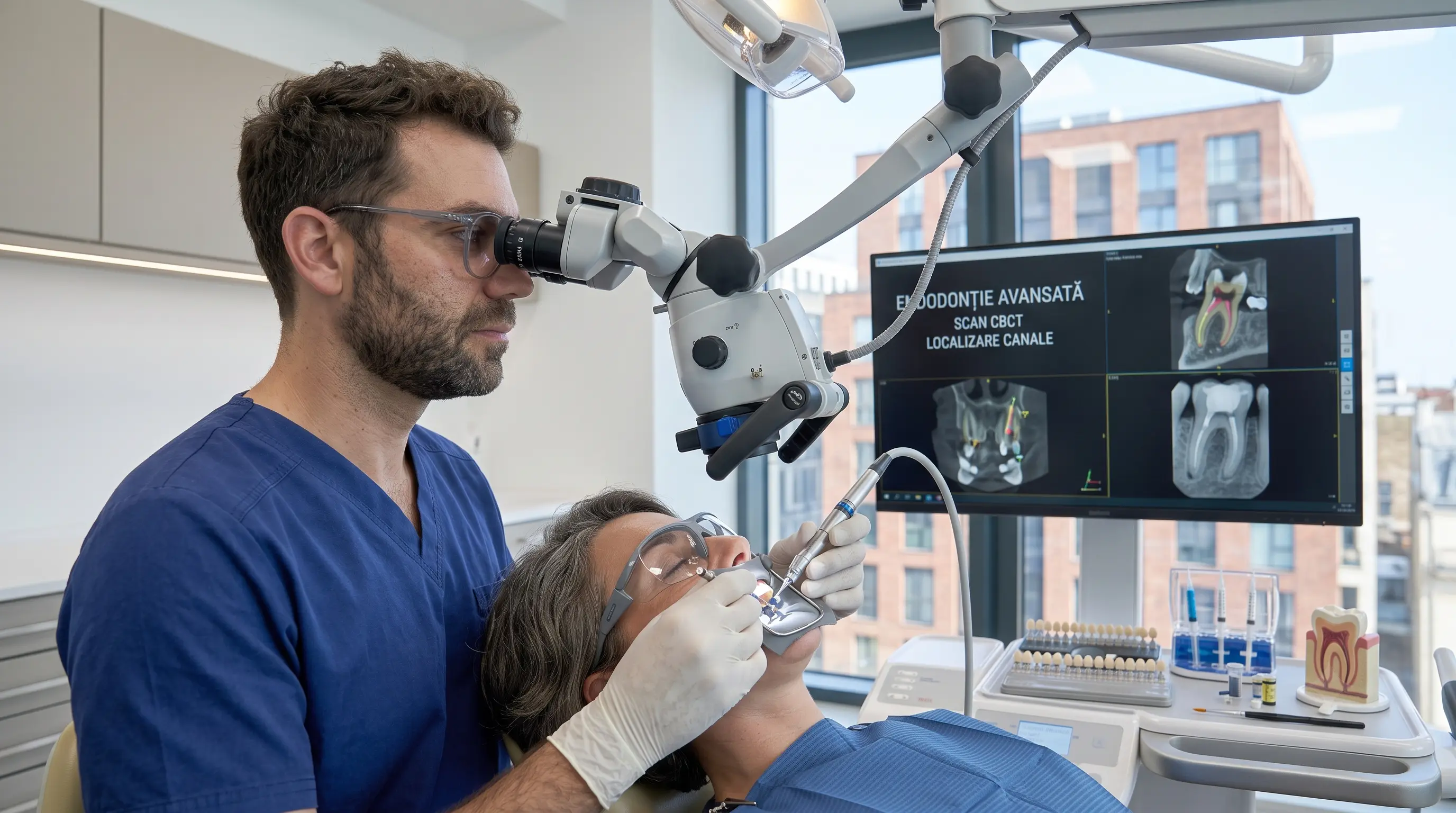


When is endodontic treatment necessary?
- Sensitivity to hot, cold, or sweets that lingers long after the stimulus is removed
- Pain when chewing
- Dull, spontaneous, or throbbing pain
- Persistent pain in a tooth that has been restored with a filling or a crown
- Pain in a tooth that has previously undergone endodontic treatment
- Tooth with abnormal mobility
- An abscess of dental origin
- A tooth that has changed color
- An apparently asymptomatic tooth that has caused damage to the bone around the root (diagnosed strictly via X-ray)

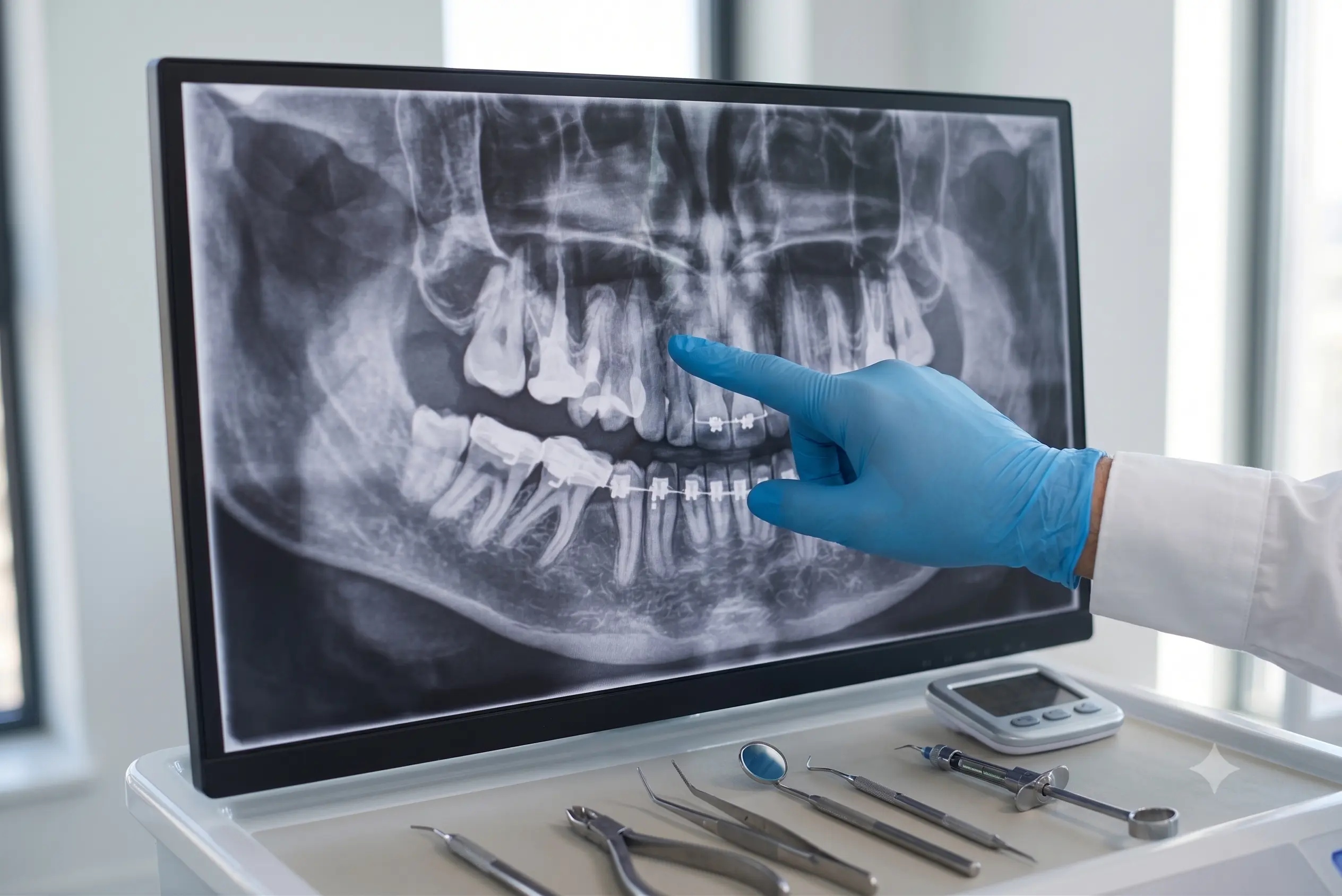
Stages of endodontic treatment
1. How is it done?
The most common toothaches are related to dental pulp damage. In the past, specialists referred to this type of toothache as the "cry of the teeth."
An untreated cavity leads to damage to the tooth's nerve, causing pain that often does not respond to common painkillers. At this point, the damage to the pulp (nerve) is irreversible. Root canal treatment is imminent.
2. Eliminating pain and discomfort
Under local anesthesia, the nerve is extracted. Once the affected tissue is removed, the pain disappears. Depending on the situation, the canal can be permanently filled in the same session, or it can be temporarily treated by applying antibiotics, calcium hydroxide, or other disinfectant substances inside the canals.
3. Treatment and disinfection of root canals
Any root canal treatment is considered complete only after the actual canal obturation (permanent filling with specific sterile, biocompatible substances).
4. Permanent root canal filling
The dental pulp is the soft tissue located inside the tooth (within the root canals), consisting of blood vessels, nerves, and connective tissue. Although the pulp is responsible for nourishing the tooth through blood vessels that enter the tooth at the root tip, it is not responsible for the tooth's functionality. Even if the pulp is removed during endodontic treatment, the tooth will continue to be nourished by the vascularization of the surrounding structures.
Questions about endodontic services
How painful is an endodontic treatment?

The most common toothaches are related to damage to the dental pulp. In the past, specialists referred to this type of toothache as the "cry of the teeth."
How painful is a root canal treatment?
All endodontic treatments are performed under deep local anesthesia. This ensures increased comfort for both the patient and the dentist.
However, there are rare cases where pulp inflammation and infection of the surrounding tissues are so advanced that they prevent the anesthetic from reaching its full potential, resulting in only partial anesthesia.
Between treatment sessions, as well as upon completion, there is a possibility of tooth sensitivity, which can be relieved by taking moderate anti-inflammatory and analgesic medication.
Modern root canal treatments are performed using rotary instrumentation, offering the dentist greater precision. In our clinic, endodontic treatments are performed with an innovative endodontic micromotor.
Using a reciprocating motion, the VDW SILVER RECIPROC micromotor prepares canals easily, safely, and quickly.
It makes the preparation of difficult anatomical canals possible with predictable results using a single file.
Want a perfect smile?
We can help