

Types of braces
There is a wide range of braces available. Depending on the patient's preference, they can be metal, invisible, and more.
- Lingual braces
- Invisalign braces
- Metal braces
- Removable braces
- Ceramic braces
- Sapphire braces
When do you need braces?
You know you need braces for your oral health when:
• For malocclusion (misaligned bite)
• For gaps/diastemas
• To align crowded teeth
• To treat rotated teeth
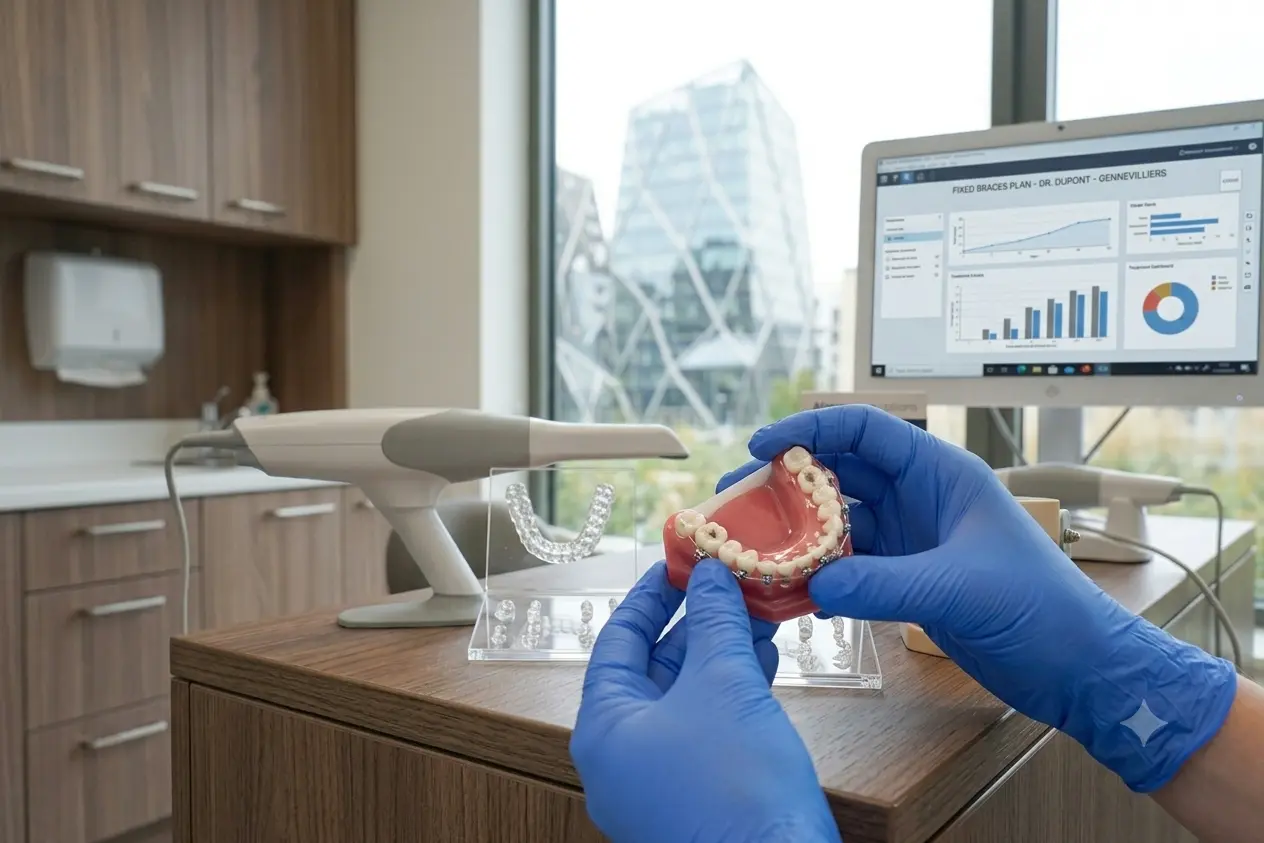
Are there any disadvantages to wearing braces?
As in any field, there are some disadvantages to orthodontics. When you get braces, you are making a major commitment to your oral health.
First and foremost, your oral hygiene routine will need to be more thorough. This means brushing after every meal, accompanied by flossing.
Professional dental cleaning is also recommended about every three months. This can include scaling, professional brushing, air flow, and more.
Another disadvantage is the list of foods you have to cut out. Say goodbye to caramels, popcorn, or other crunchy items, as well as sugary treats.
The discomfort caused by braces in the first few months after they are fitted is also a drawback. It will take some time to get used to this foreign object.
Although wearing braces might seem difficult, it is necessary for good oral health.
The benefits of braces
Correcting tooth alignment
With the help of braces, you can straighten and correct the curvature of your dental arch.
Provides dental aesthetics
Aligning the dental arches results in an aesthetic appearance.
Improved chewing
Correcting the curvature of the dental arches also ensures a proper bite.
Boosts self-confidence
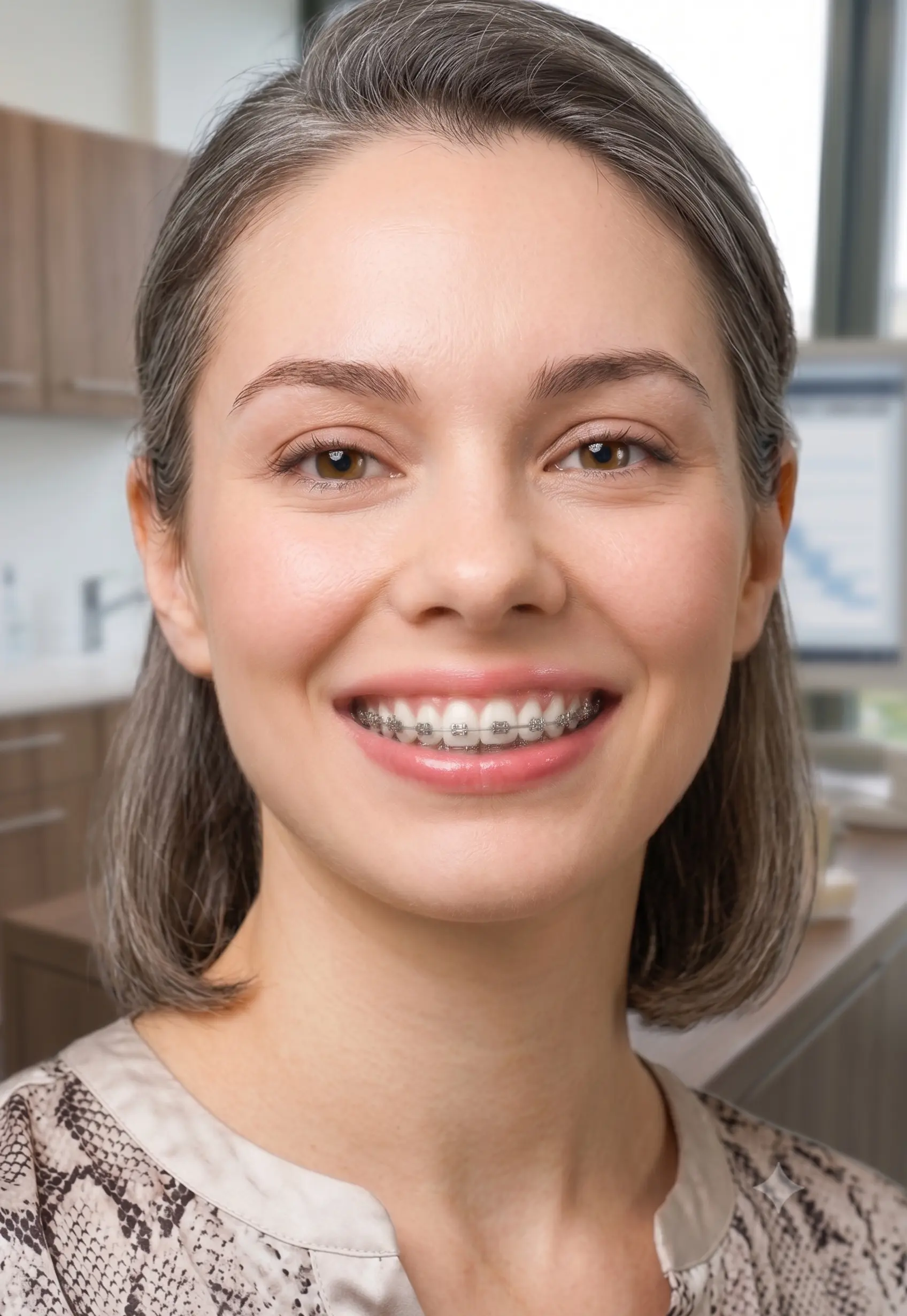
Straightening your teeth boosts your self-confidence, giving you a more aesthetic smile.
Questions about orthodontic services
What does orthodontics involve?

It is a medical specialty within dentistry that focuses on preventing or correcting tooth alignment issues using orthodontic appliances.
How much do braces cost?
Prices vary depending on the type of braces, with metal braces being the most affordable, followed by ceramic braces. While not exactly cheap, it is an important investment in your oral health.
How long do I need to wear braces?
Depending on the severity of the situation, the duration of treatment varies. Mild cases require braces for between six months and a year, while those with severe anomalies can take up to three years.
Do I need to avoid certain foods?
Yes, avoiding certain foods is mandatory when you have braces. Foods like popcorn, nuts, candy, chewing gum, etc.
Types of braces
Lingual braces
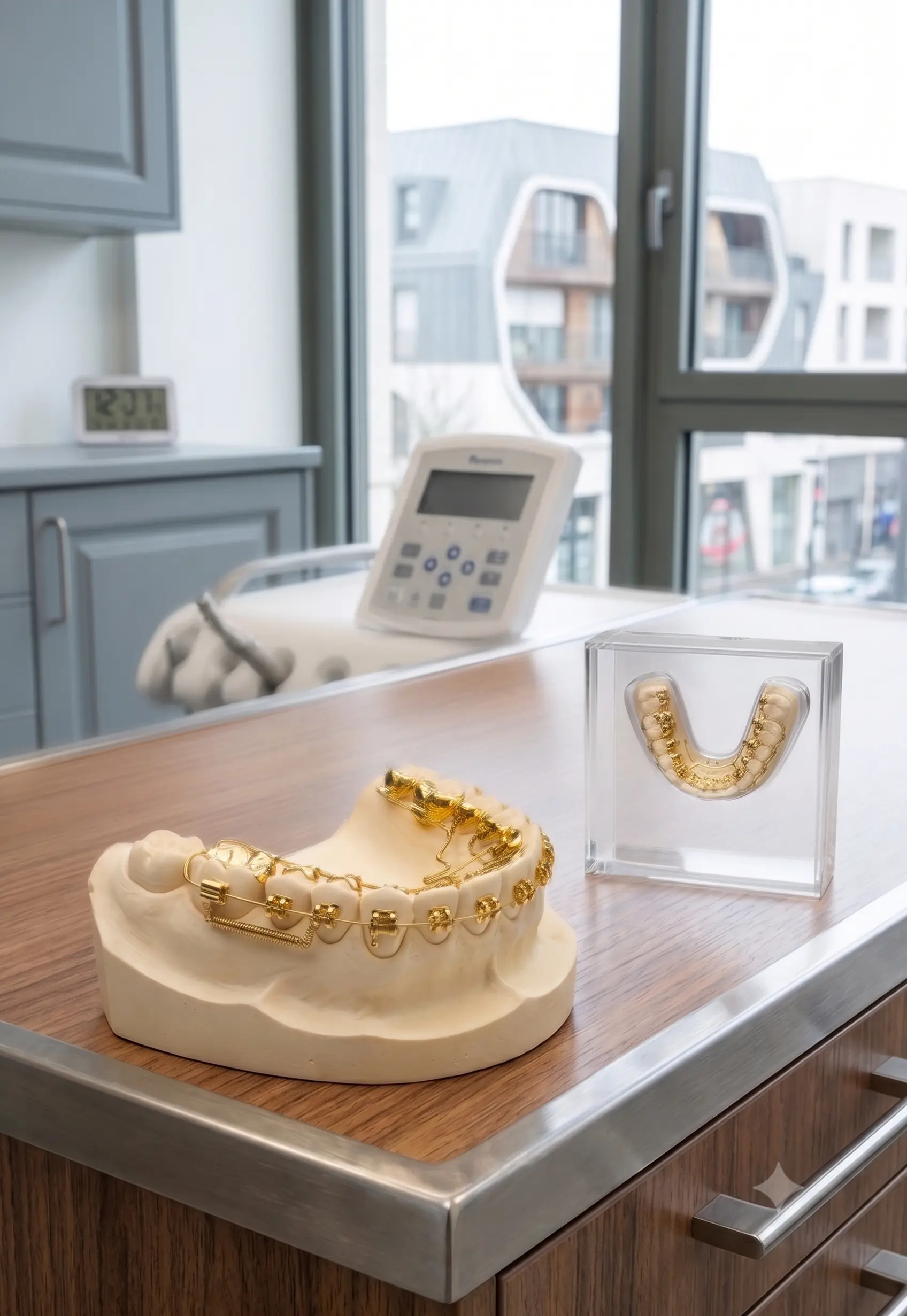
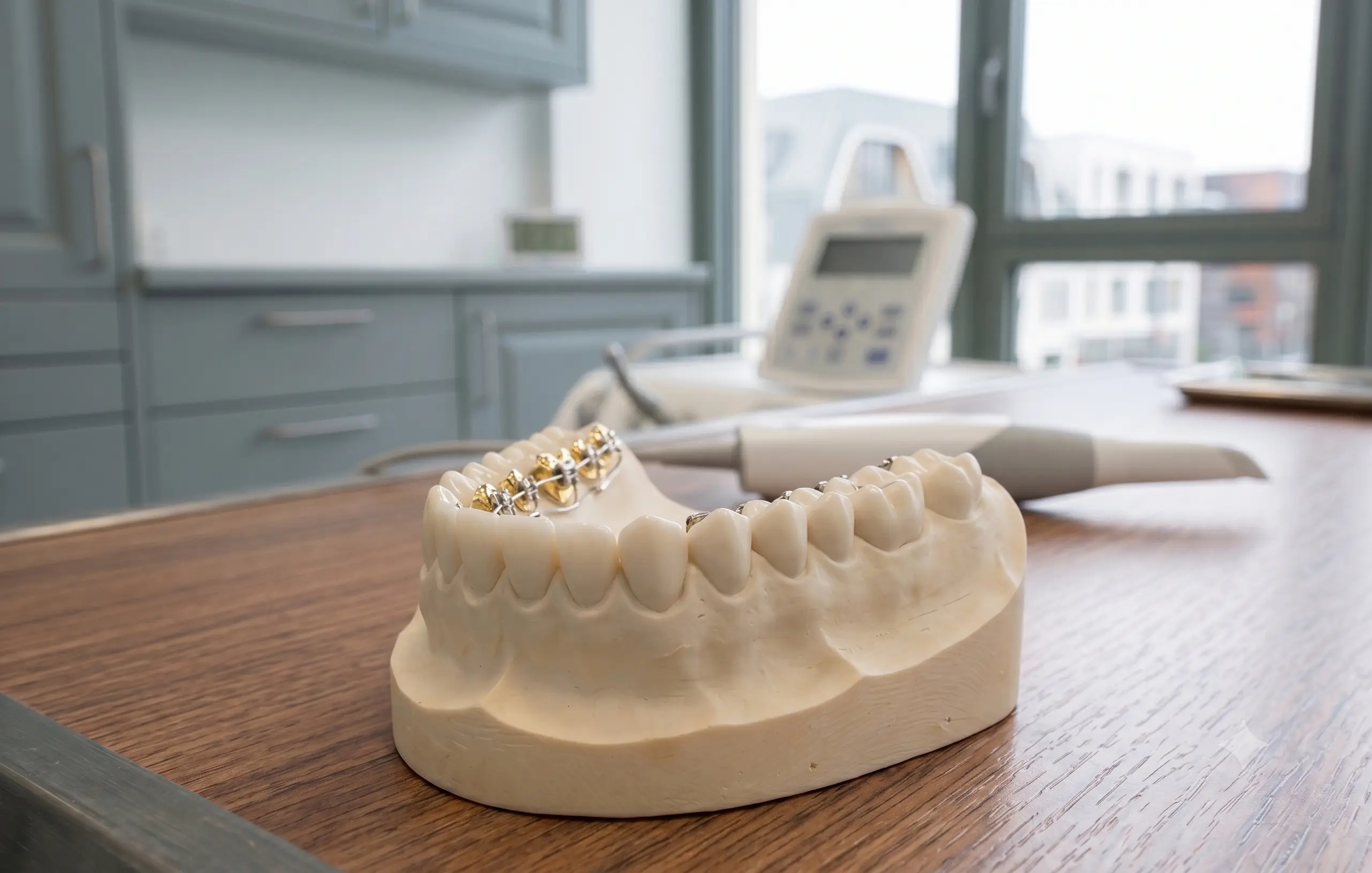
Unlike other types of fixed braces, lingual braces are applied to the inner surface of the teeth (the side facing the tongue/palate). There are several lingual brace systems designed and manufactured by different companies. Dr. Raluca Ghibă is certified for the system called Incognito!
The Incognito™ system also has an Incognito Lite version, which is applied only to 6-8 teeth of the dental arch. The Incognito™ Lite system is indicated for minor to moderate anterior dental crowding or in cases of relapse after previous orthodontic treatment.
Advantages of lingual braces:
• Completely invisible ⇒ you can smile with confidence
• Custom-made by the dental laboratory for each patient, meaning they can only be used by you
• They can be used to treat a fairly large number of dental anomalies
• Eliminates the risk of white spots (decalcification) on the visible surfaces of the teeth
• Since the brackets are made of a gold alloy, they can be used by people with nickel allergies.
Disadvantages of lingual braces:
• Contraindicated for patients with low tolerance for discomfort
• Treatment can take longer; adjustment sessions sometimes take longer than with traditional braces
• Higher discomfort for the tongue and speech difficulties, especially at the beginning, both of which usually improve within 2-4 weeks; higher price because they are computer-designed and custom-made specifically for you.
Invisalign braces
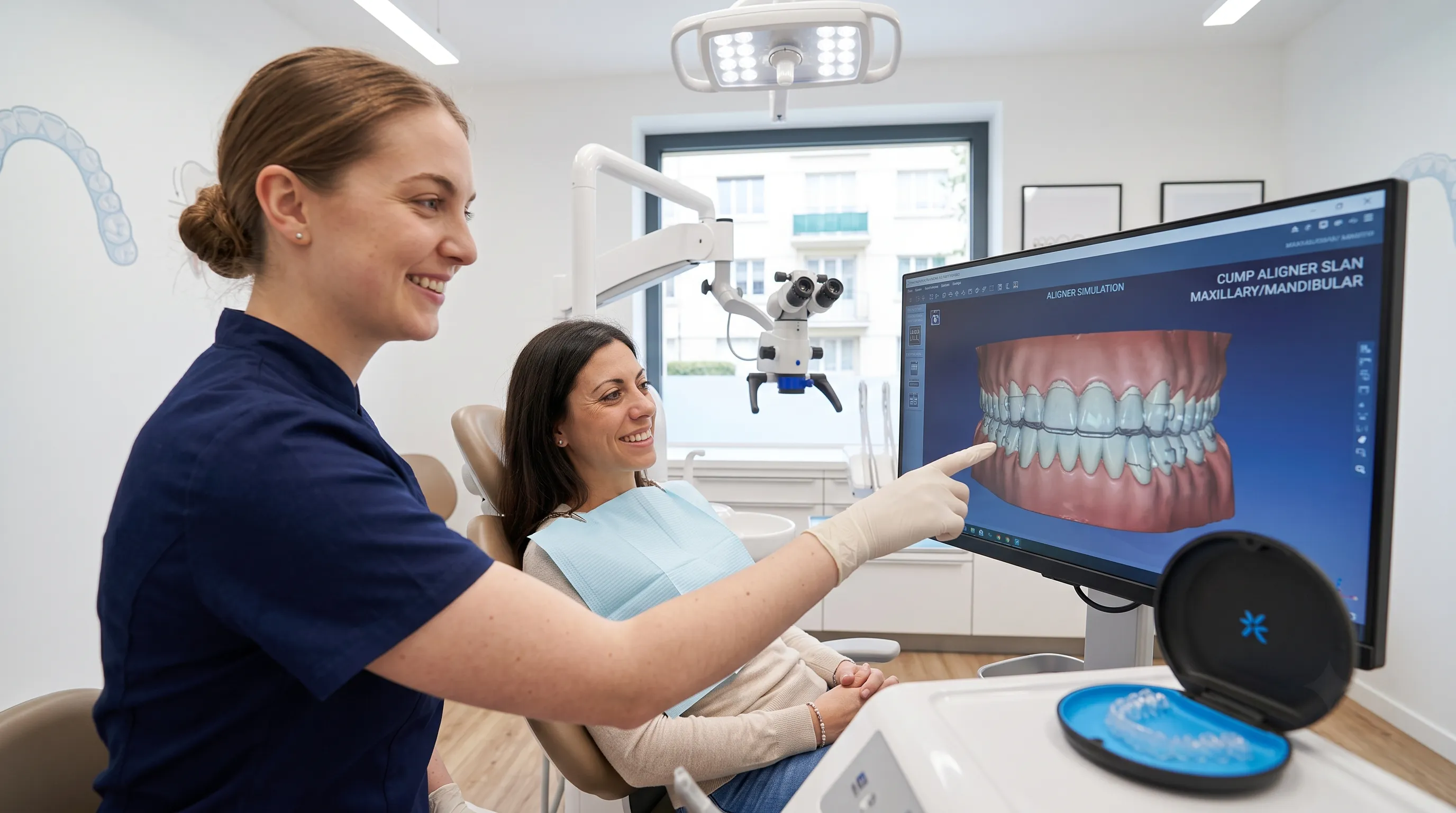
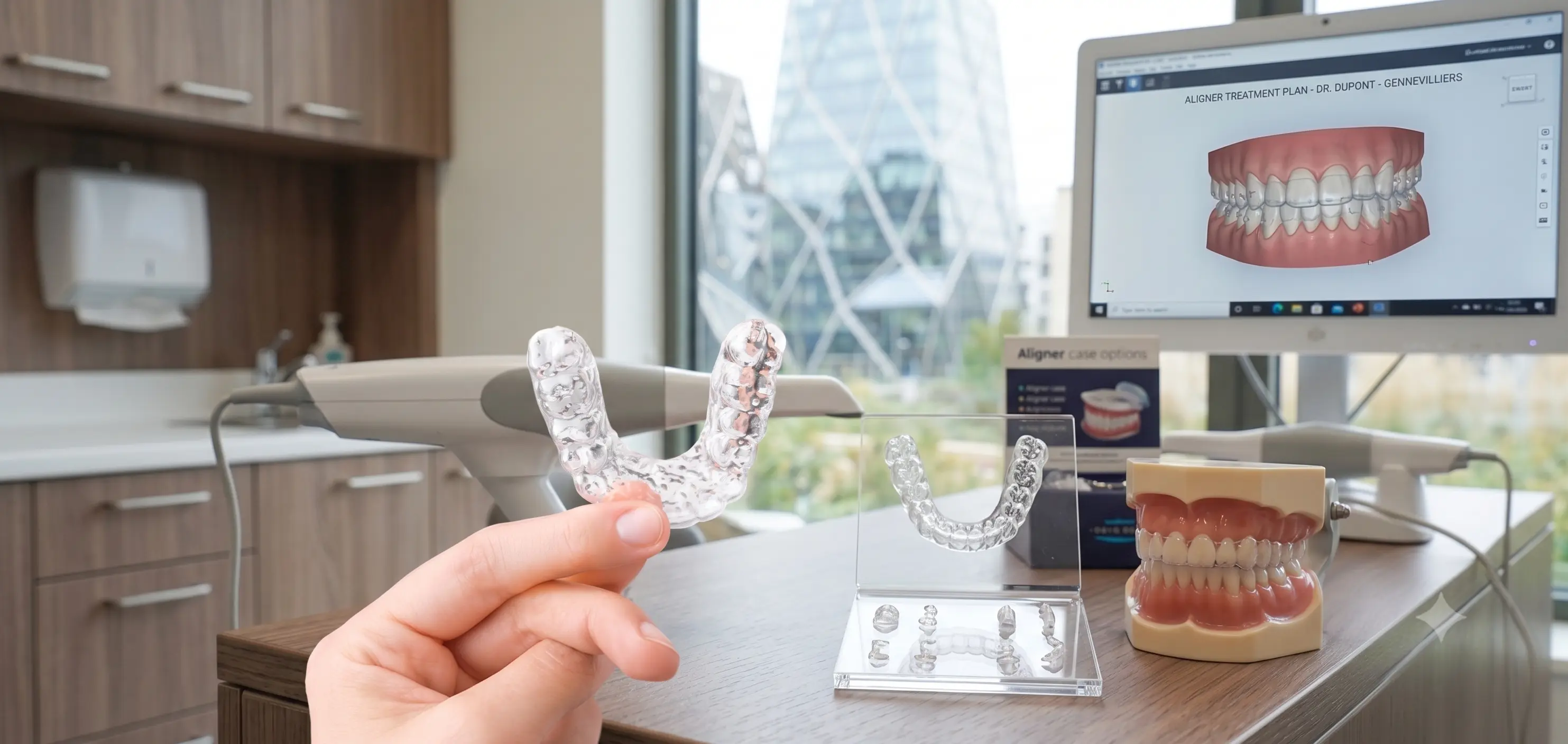
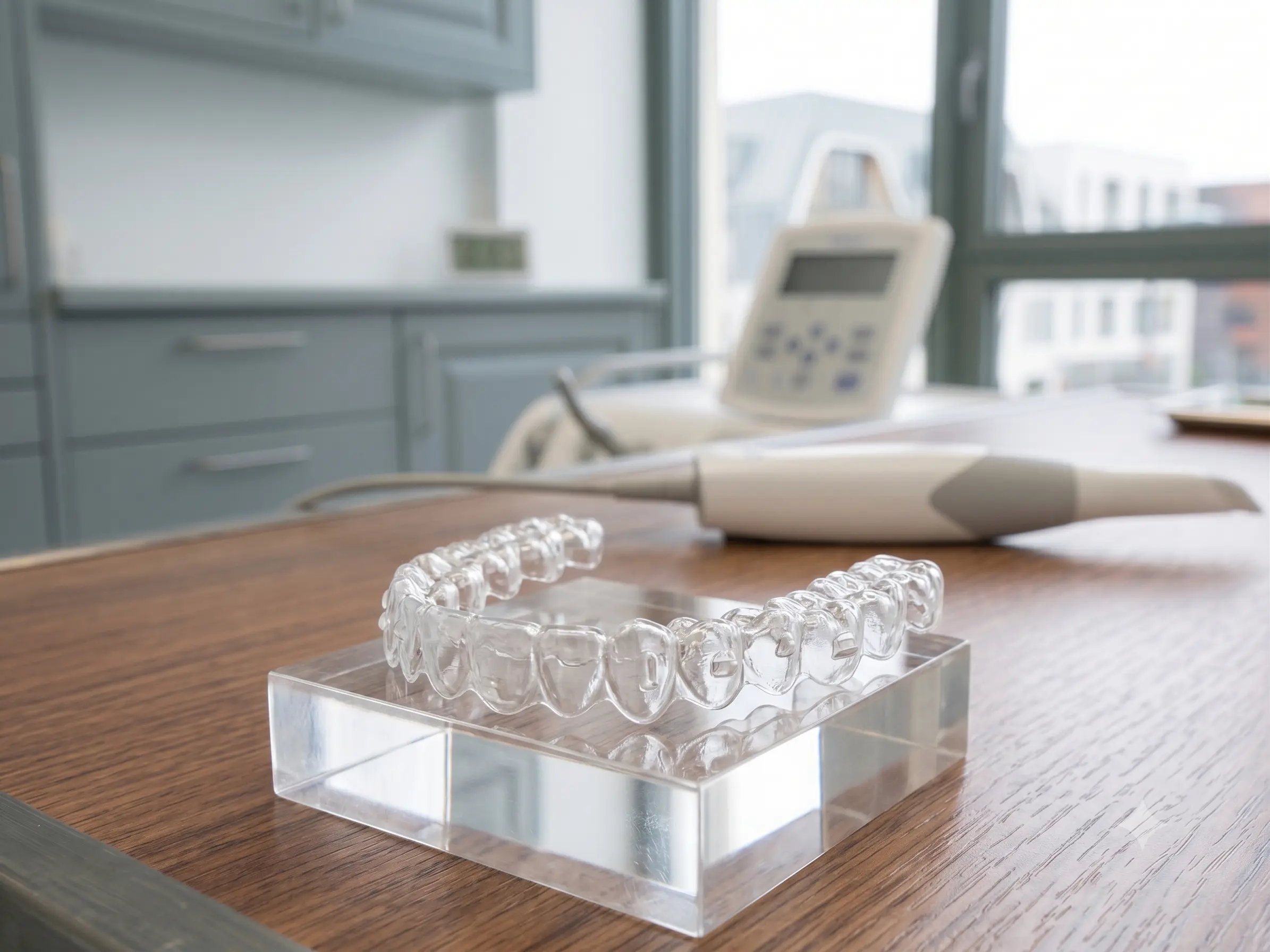
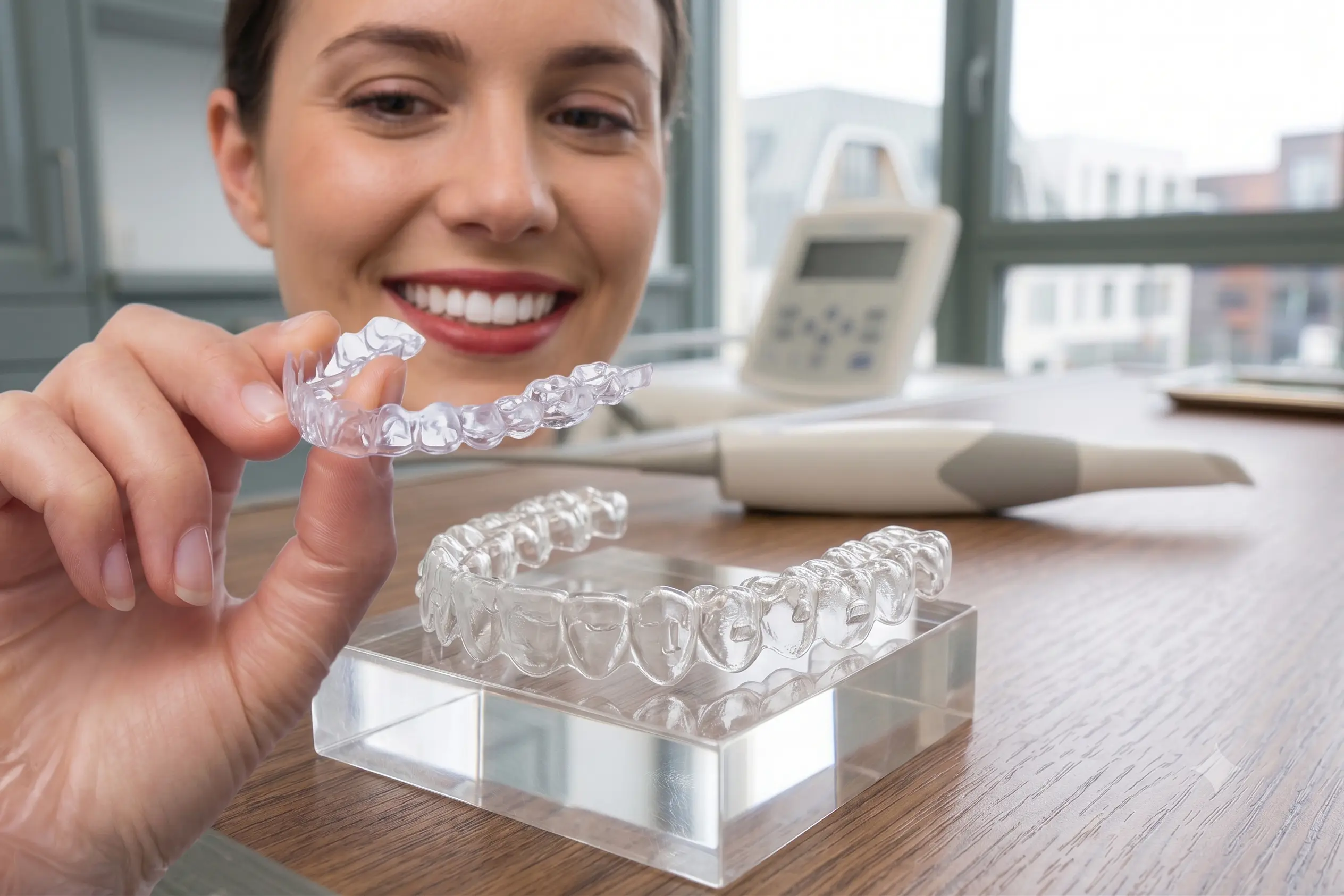
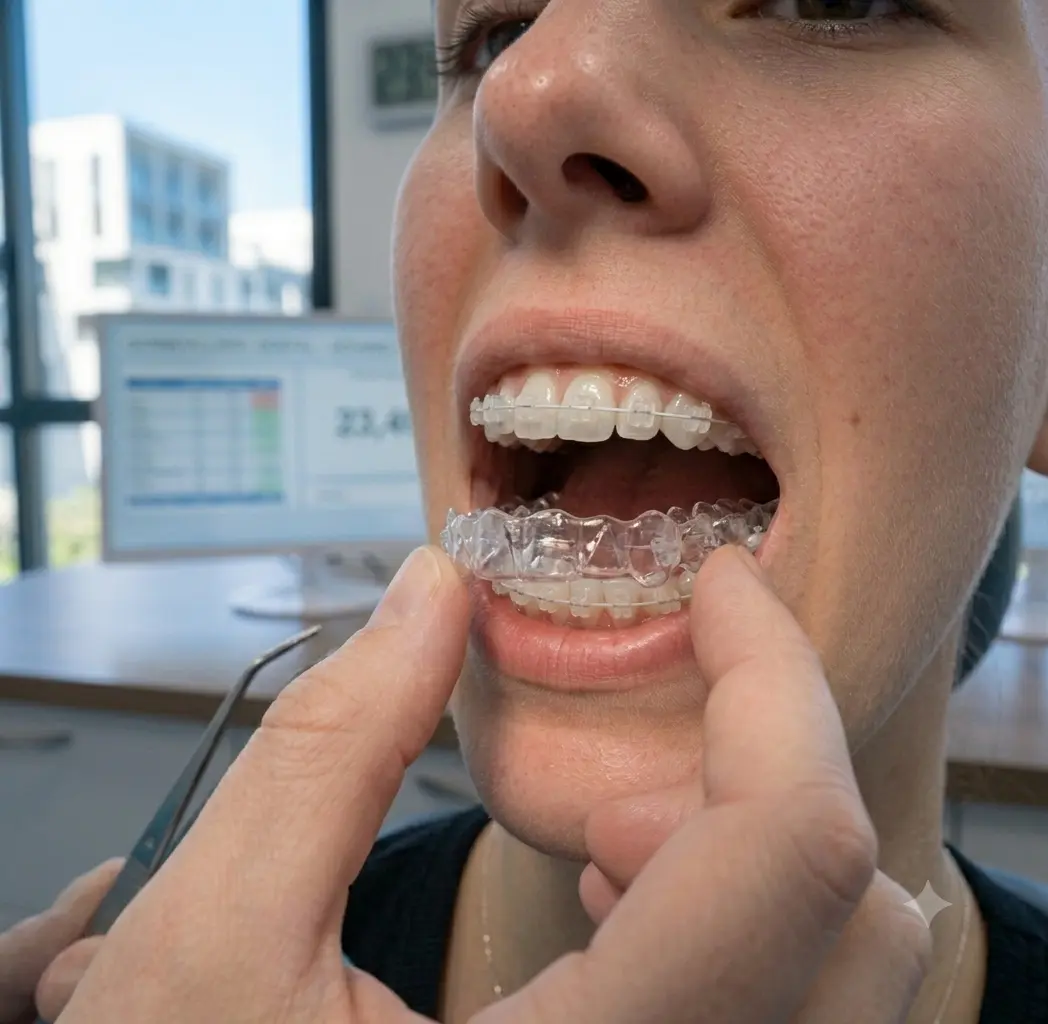
Recently, a second method of invisible braces has gained notoriety under the Invisalign brand. It is radically different from the appliances described so far, as it is actually a set of computer-generated aligners that correspond to successive positions of the moving teeth. They are worn continuously for two weeks at a time, except during meals and oral hygiene routines.
The advantage of these aligners is that they are transparent, therefore almost invisible, and are very easy to put on and take off, with check-up visits to the doctor being less frequent and fewer in number.
It should be mentioned that invisible braces are not suitable for every type of orthodontic problem; sometimes, wearing a classic fixed appliance is absolutely necessary.
Additionally, in extreme cases, wearing braces is not possible without surgical intervention on the jawbone (orthognathic surgery). These are very rare cases, and the orthodontist will warn you about this situation during your first specialist consultation.
Metal braces
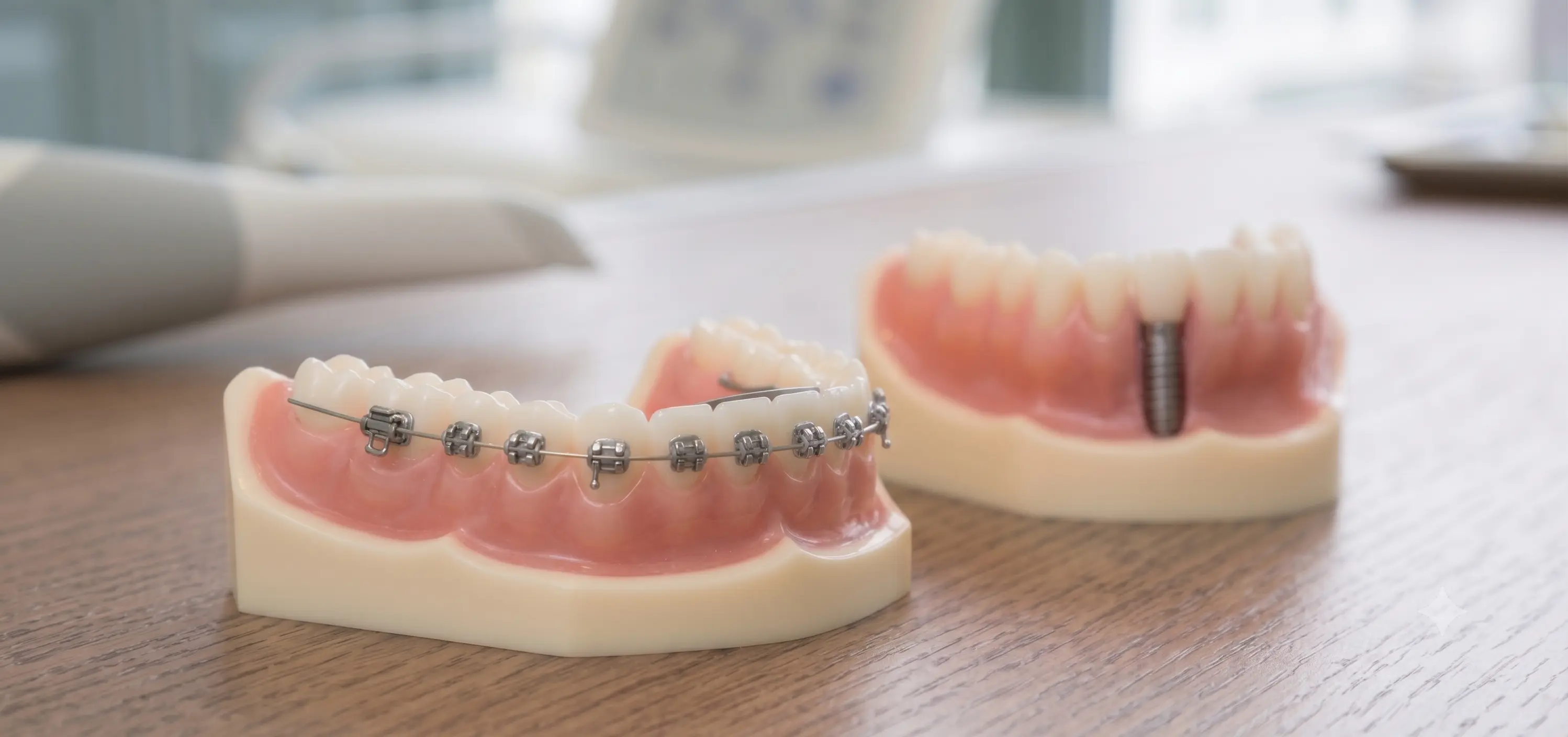
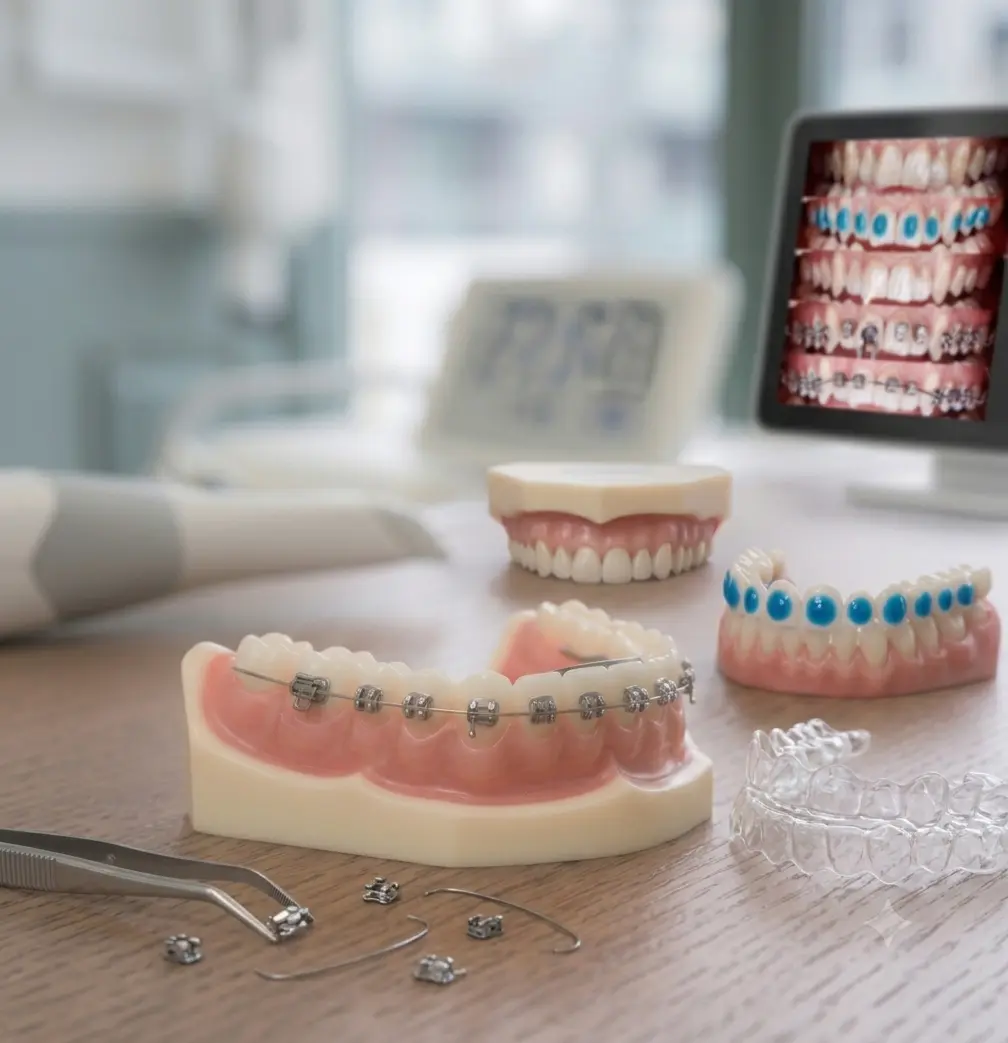
The components of metal braces—the metal brackets—are made of austenitic stainless steel. Their corrosion resistance is increased by coating traditional metal brackets in platinum or gold, or by manufacturing them from pure titanium or its alloys. In terms of color, they can be silver or gold.
Regarding how the orthodontic wire is attached to the bracket, metal braces can be traditional or self-ligating. In the case of the traditional type, which is the one predominantly used in our office, the wire is anchored to the bracket via a metal or elastic ligature.
Elastic ligatures can be transparent or colored and are usually changed monthly. In the case of self-ligating metal braces, the orthodontic wire is held in the bracket by a "door" mechanism. These types of braces can, in turn, be active or passive.
Advantages of metal braces:
• Lowest price
• Treatment period is usually shorter
• You can choose dark-colored ligatures so that coffee/cola/nicotine stains are not visible
• High resistance to deformation during chewing and orthodontic maneuvers during treatment
• Gold-colored ones generally have a more pleasant appearance.
Disadvantages of metal braces:
• More visible than ceramic/sapphire/lingual/Invisalign options
• Can cause more discomfort to the cheeks/lips than other types of braces (discomfort disappears within 1-2 weeks)
• Some types of brackets that are not coated in gold or platinum may release elements like nickel and chromium into the oral environment.
Removable braces
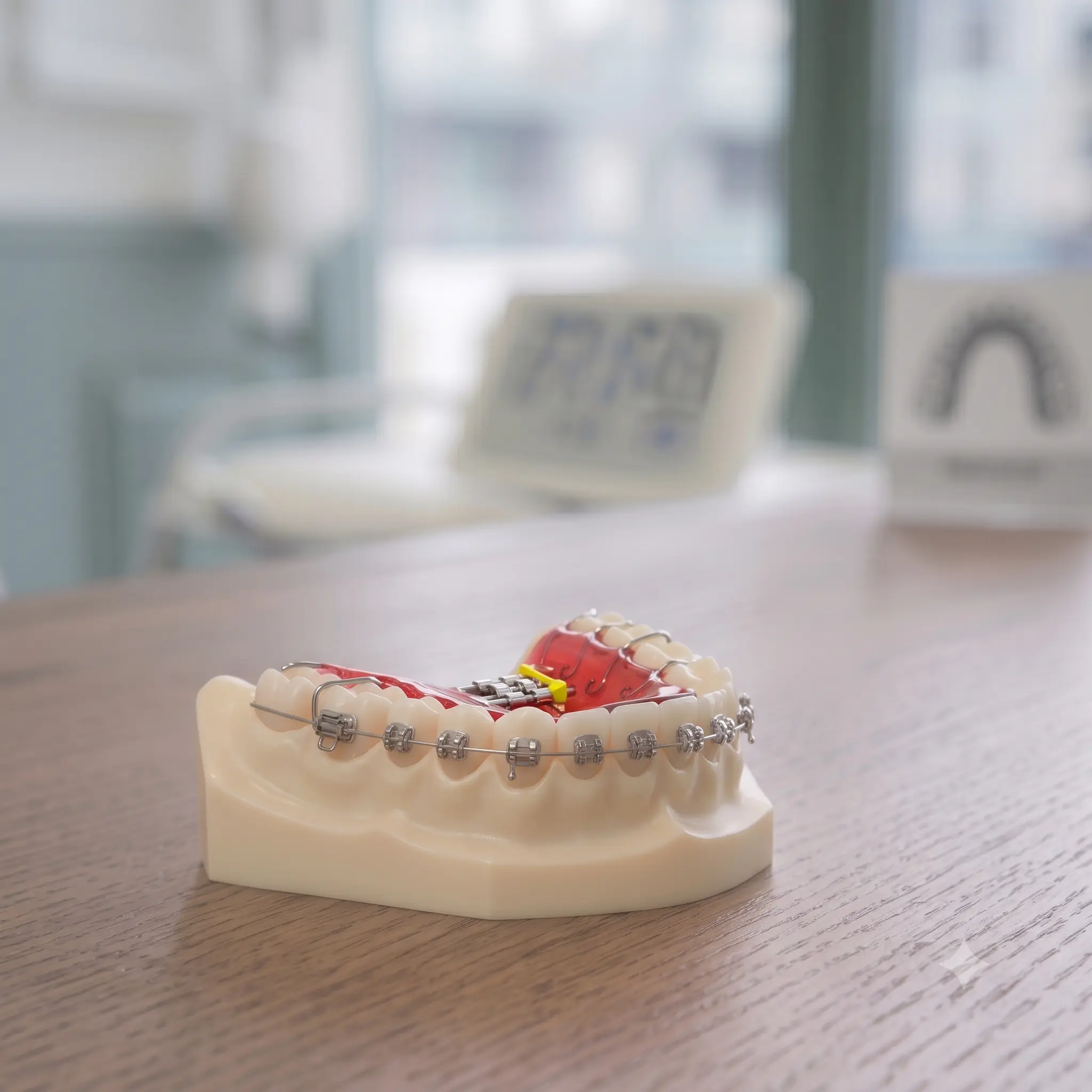
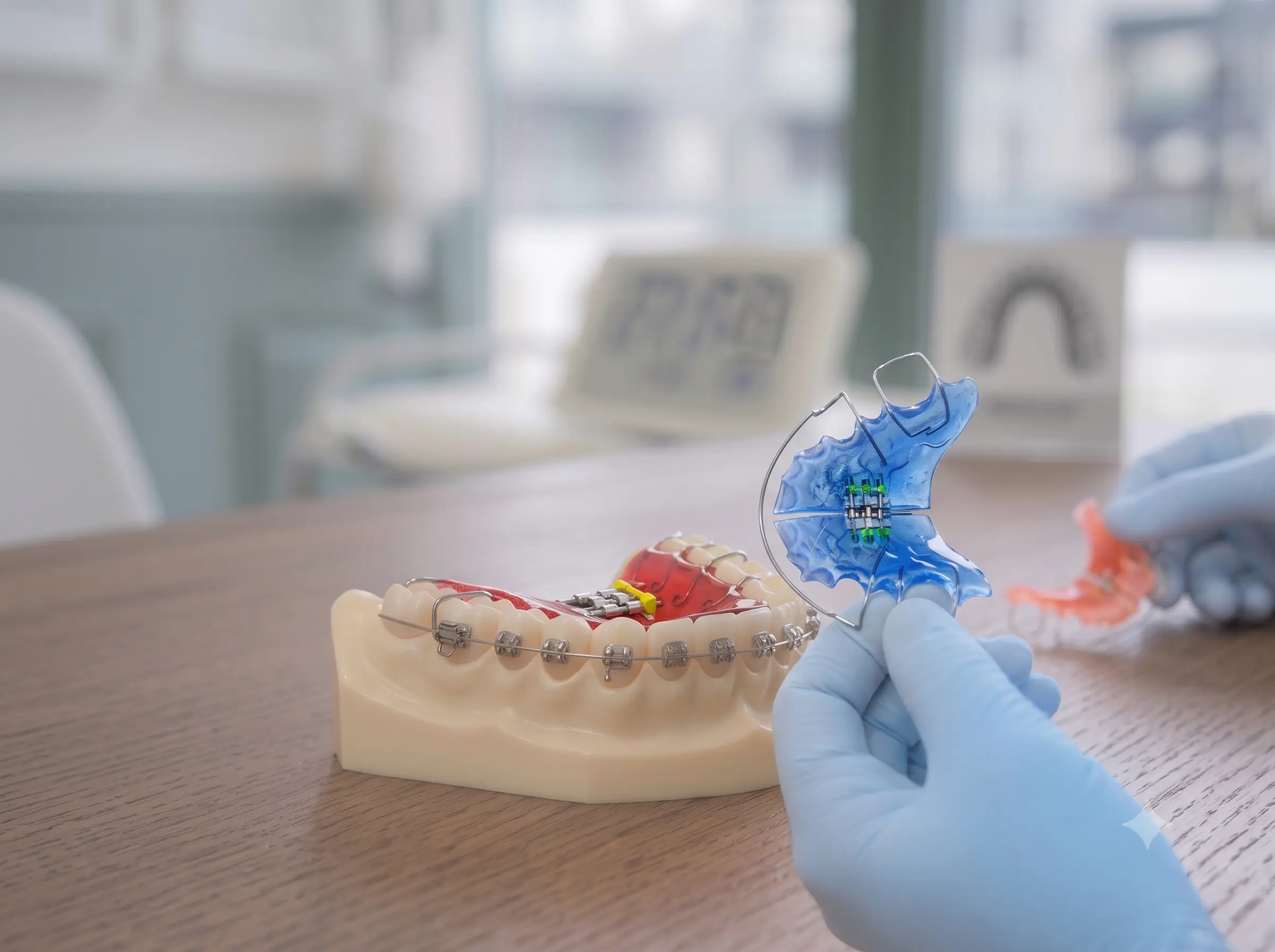
Removable braces are a type of orthodontic appliance that the patient can take out of their mouth. They are designed primarily to guide jaw growth so that the teeth have the necessary space for correct positioning.
Who can benefit from treatment with removable braces?
Removable braces are primarily for children during their growth period, usually used between the ages of 8 and 12, but there are mild cases that can be treated with removable appliances even in adults.
Advantages of removable braces:
• Removable braces are effective if used at the right age, helping to avoid more complex and costly treatments in adulthood
• Removable braces treat dento-maxillary anomalies from their early stages, making treatment more effective and without the risk of relapse
• Removable braces can be customized, making them easily accepted by young patients
• Removable braces have a lower cost compared to fixed braces.
Disadvantages of removable braces:
• Treatment effectiveness depends on patient cooperation
• They cause more discomfort than fixed braces
• They can cause speech difficulties at the beginning of treatment.
Ceramic braces
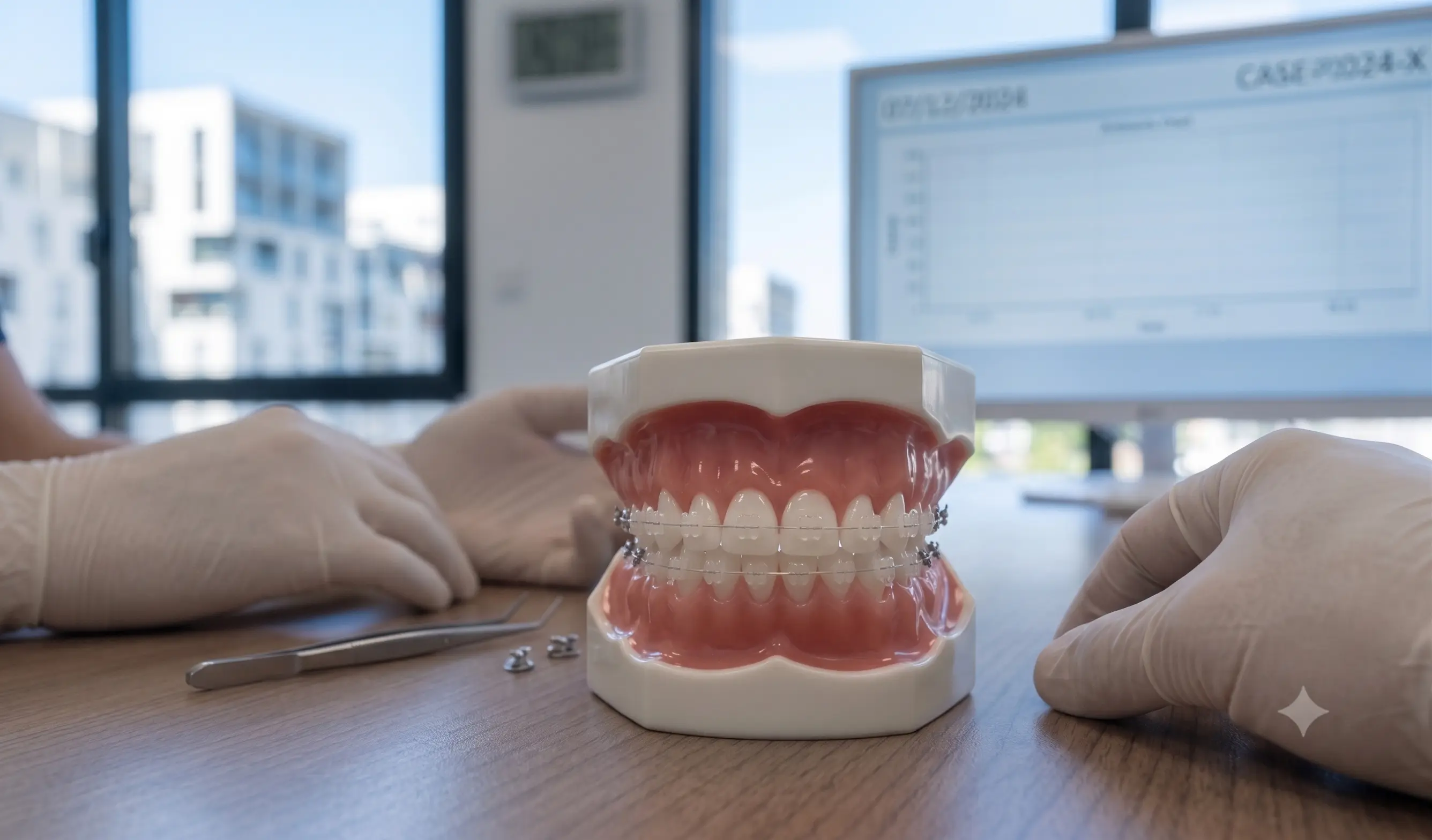
Ceramic braces consist of ceramic brackets whose chemical composition is primarily alumina (aluminum oxide or Al2O3) with a polycrystalline structure, to which orthodontic wires are attached via metal or elastic ligatures. Orthodontic wires can be silver or white. White wires tend to lose their appearance over time as the coating that gives them their aesthetic white look wears off unevenly.
Do ceramic braces keep their color over time?
Ceramic brackets are highly resistant to staining, but the elastic ligatures that attach the brackets to the orthodontic wires usually do stain. This happens especially in smokers and those who consume coffee, tea, or cola. However, these elastic ligatures are usually changed monthly.
Advantages of ceramic braces:
• Less visible than metal ones
• Lower price than Incognito or Invisalign lingual braces
• Sometimes cause less discomfort to the cheeks and lips than metal ones
• There is a type of ceramic bracket equipped with a metal slot. These perfectly combine the aesthetic advantages of ceramic with the increased functionality of a metal slot. As such, these types of brackets are our favorites! Ask your orthodontist for more details during your first visit to our office.
• Can be used for patients with nickel allergies when they are made entirely of ceramic.
Disadvantages of ceramic braces:
• Higher price than metal ones
• Treatment can sometimes take longer than with metal braces because the friction between the ceramic bracket and the orthodontic wire is higher. However, this can be avoided by using ceramic braces with a metal slot.
• Over time, they may change color due to various food pigments
• High potential for abrasion of the teeth opposing the dental arch where they are mounted, so they are usually not recommended for the lower dental arch
• Less resistant than metal ones, as they can fracture during chewing or various orthodontic maneuvers during treatment
• Higher risk of enamel fractures upon removal from the tooth
• Some types of ceramic brackets are larger than metal ones.
Sapphire braces
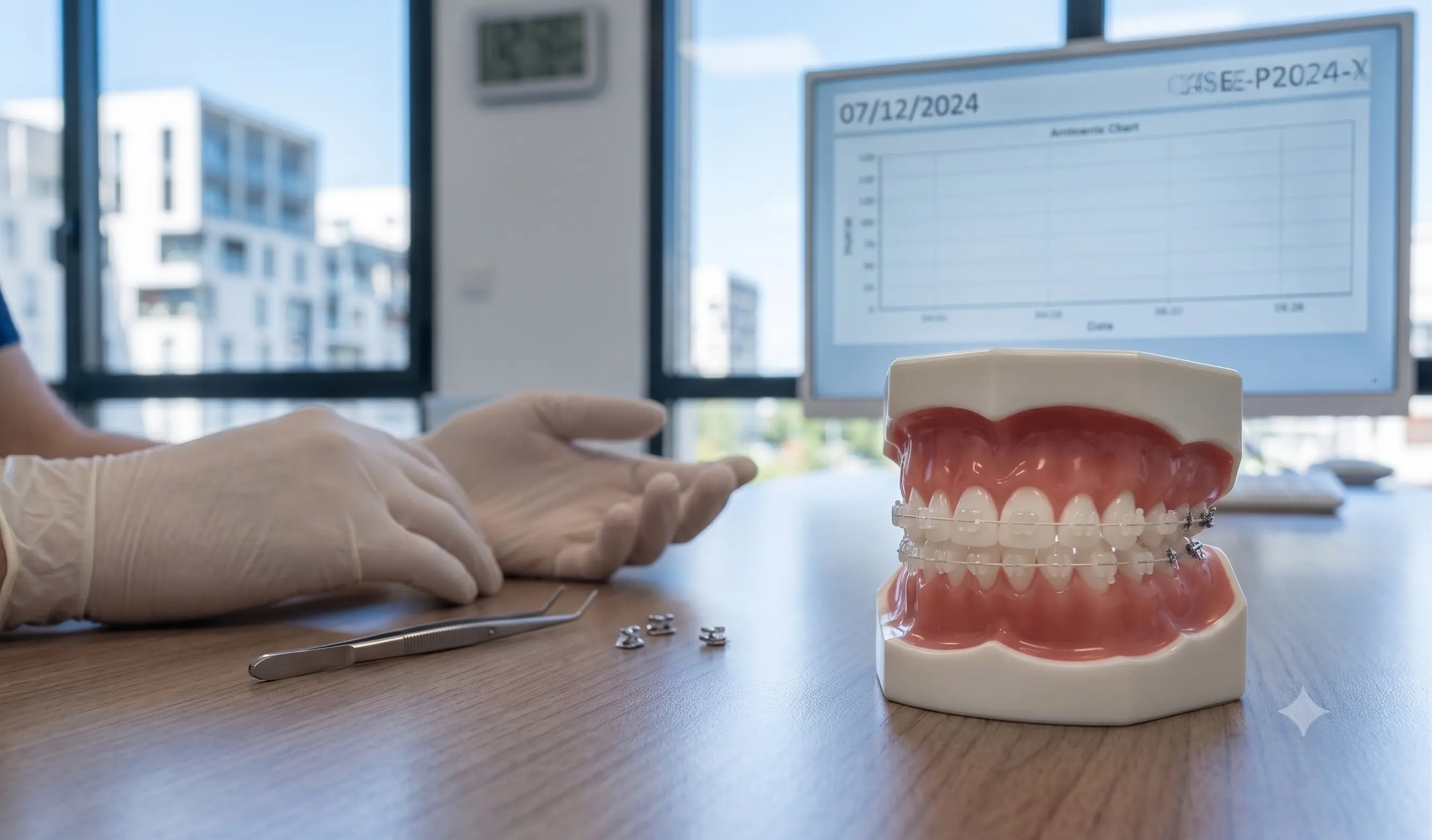
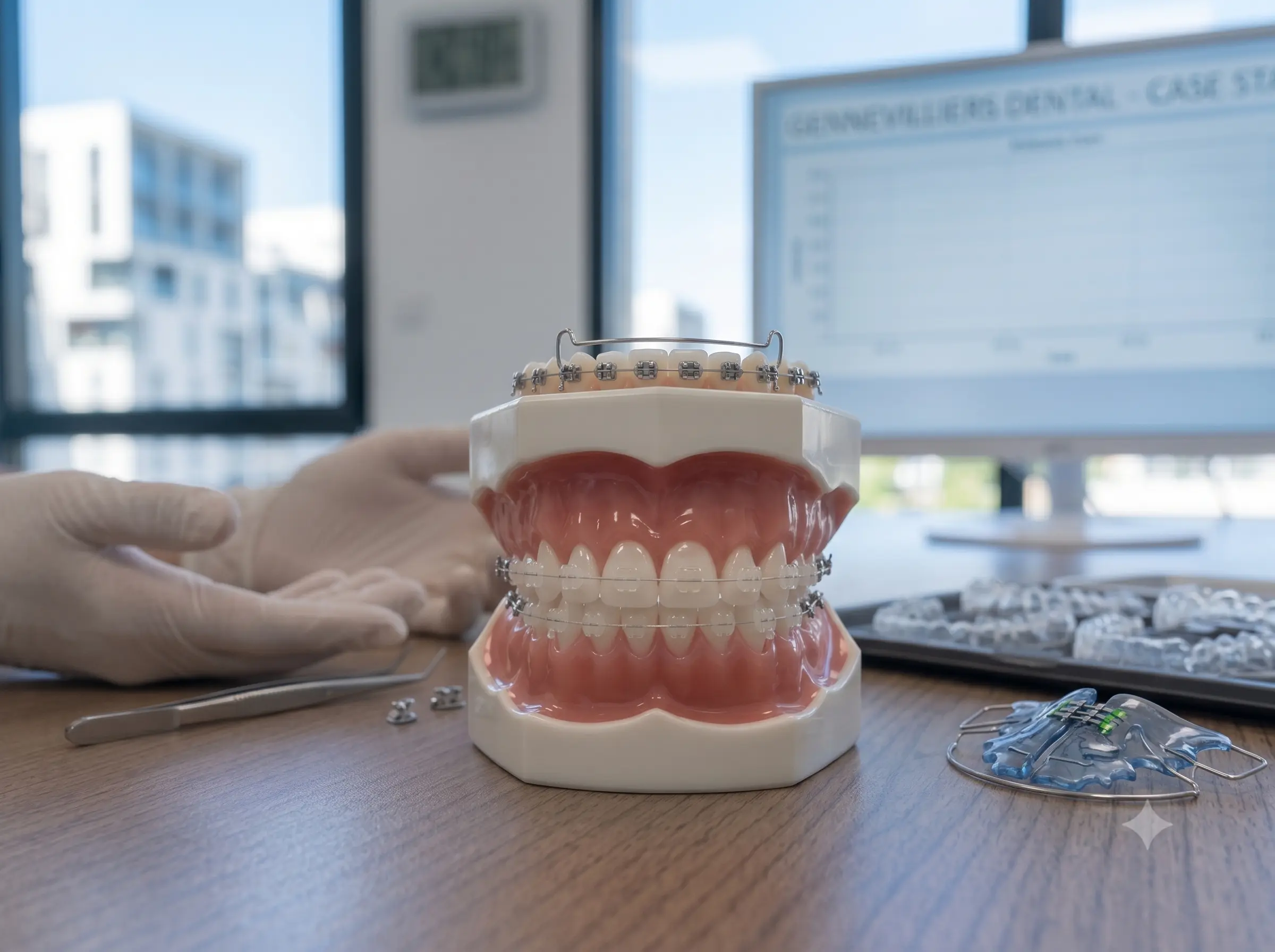
Sapphire braces consist of brackets made from alumina (aluminum oxide or Al2O3), the same chemical composition as classic ceramic brackets. The difference between the two is that the alumina in sapphire brackets has a monocrystalline structure, compared to the polycrystalline structure of classic ceramic ones. This gives sapphire braces greater transparency and sometimes makes them less visible on the teeth. I say "sometimes" because the degree of visibility depends on the shade of the teeth they are applied to.
It is important to know that sapphire braces are not invisible. They are still applied to the vestibular surface of the teeth (facing the lips and cheeks), so they are visible, though less so than metal ones. The type of braces that can be called invisible is the lingual appliance (which is applied to the tongue-facing surface of the teeth).
The archwires attached to sapphire brackets are most commonly silver, but can also be white or sometimes colored. Similarly, the ligatures used to attach the archwires to the brackets are most commonly transparent elastic bands, but can also be white, colored, or silver/white metal. Although sapphire brackets themselves are highly resistant to staining from various food pigments, the elastic ligatures that attach the orthodontic wires to the brackets do stain quite frequently. These elastic ligatures are changed at every monthly adjustment.
Advantages of sapphire braces:
• Transparent brackets
• Less visible when teeth are whiter. If teeth have a yellowish tint, sapphire brackets may be more noticeable than ceramic ones.
• Sometimes offer greater mechanical resistance and are more resistant to staining from food pigments.
Disadvantages of sapphire braces:
• Higher price
• Higher risk of enamel fracture upon removal from teeth
• Risk of abrasion (wear) or fracture of the enamel on the opposing teeth. This is one of the reasons why they are usually not recommended for the lower (mandibular) arch.
• Higher risk of bracket fracture compared to metal ones.
Art Dental Studio Reviews
We take pride in a community of people who have regained their dental health and confidence in their own smiles.
.svg)
"My teeth were in a terrible state, which made chewing difficult. I wore braces from Art Dental Studio for three years, and now, besides looking great, they are healthy too."
Denisa Burde
Satisfied patient
"Whenever it came to smiling, I always hid it because of my teeth. After a visit to the orthodontics department at Art Dental Studio, I got braces. I've been wearing them for a year now, and the results are visible."
Eugen Florea
Satisfied patient
I knew I needed braces for a long time, but I was afraid to make the decision. I finally chose to go to the dentist, and now, after two years of wearing braces, I can say that I have regained the confidence to smile.
Anamaria Toma
Satisfied patient
Want a perfect smile?
We can help