Dental crown on an implant: what you need to know

Once the implant has been correctly placed and the bone has healed well, the stage patients look forward to most follows: the implant-supported dental crown. Essentially, this is the visible part of the restoration, which restores the natural appearance of the tooth and, just as importantly, its chewing function. For many patients, this is where the biggest questions arise: what it looks like, how long it lasts, and whether it will feel like a normal tooth.
The short answer is that a well-made implant crown can provide results very close to natural teeth. However, the final quality does not depend on just one thing. It depends on the implant, its position, the healing process, the crown material, how it is adjusted to your bite, and the attention given to oral hygiene after treatment.
What is an implant-supported dental crown
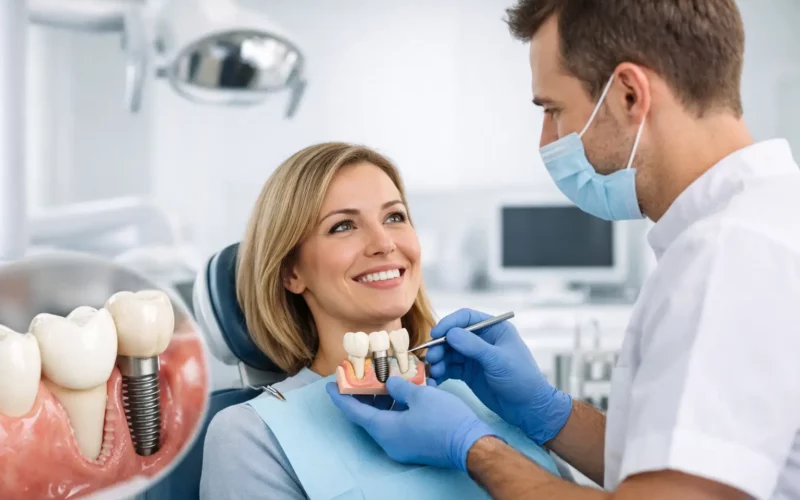
The crown is the prosthetic part fixed on top of the dental implant. The implant replaces the root of the missing tooth, while the crown replaces the visible part. There is usually a connecting piece between them called an abutment, which helps secure the restoration correctly.
In short, the implant sits in the bone, and the crown is what you see when you smile, talk, or chew. That is why this stage has both an aesthetic and a functional role. A successful restoration must blend naturally into your smile while also supporting chewing forces without discomfort.
When the crown is placed on the implant
The timing for applying the restoration varies from case to case. For some patients, the crown is attached after the full osseointegration period, meaning after the implant has stably fused with the bone. In other carefully selected situations, the doctor may recommend a temporary crown sooner, especially in the front area where aesthetics matter immediately.
This is where an important detail comes in: not every implant receives a permanent crown immediately. If the bone needs time, if initial stability is insufficient, or if there are specific bite characteristics, the treatment is done in stages. Often, patience leads to a more secure long-term result.
How the treatment is performed
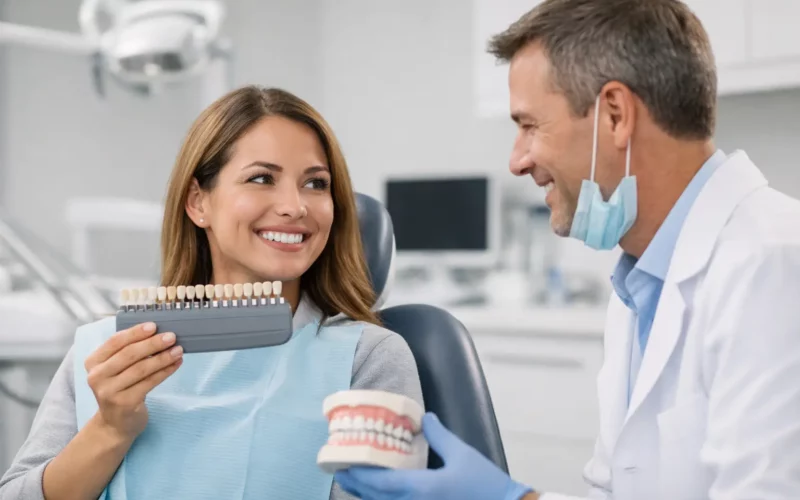
After the implant has healed, impressions are taken or a digital scan is performed to obtain the exact shape of the future restoration. Then, the color, shape, and size of the crown are determined so that it matches the neighboring teeth naturally.
At this stage, the doctor looks at more than just aesthetics. They also check the contacts between teeth, how the bite closes, and the distribution of pressure during chewing. A crown that is too high or poorly adjusted can cause discomfort, overload the implant, and affect the final result.
The crown can be fixed by cementing or screwing, depending on the treatment plan. Both options are used in modern dentistry, and the choice is made based on the implant's position, access, aesthetics, and ease of maintenance.
Materials used for implant crowns
The choice of material affects both the appearance and the durability of the restoration. The most common options are zirconia-supported ceramic and monolithic zirconia, with recommendations varying based on the tooth's location.
Zirconia crowns
Zirconia is valued for its strength and excellent appearance. In the posterior region, where chewing forces are higher, it can be a highly effective choice. In the anterior region, it can also provide an excellent aesthetic result, especially when well-customized.
Ceramic crowns
All-ceramic is often preferred for front teeth, where transparency and fine detail are essential. The appearance is very close to that of natural enamel, but the final recommendation depends on the bite, available space, and the patient's habits.
There is no single perfect material for everyone. For one patient, aesthetics may matter more, for another, strength, and sometimes the right criterion is the balance between the two.
How long the treatment takes
If we are talking strictly about the prosthetic stage, creating the crown can take anywhere from a few days to a few weeks, depending on the complexity and the steps required in the laboratory. If we include the implant placement, the total treatment time increases and can vary depending on the healing process.
In simple cases with good healing and no additional procedures, the patient reaches the final restoration relatively quickly. In cases where bone grafting was necessary or the clinical context is more complex, the timeline is extended. This is why an accurate estimate can only be made after a consultation and diagnostic tests.
How natural it feels
One of the most common questions is whether an implant crown feels like a natural tooth. In everyday life, for most patients, the difference is minimal after the adjustment period. You can chew, speak, and smile comfortably, and the appearance can be very close to that of natural teeth.
There is, however, a useful nuance. An implant does not have the exact same type of sensitivity as a natural tooth because it lacks a periodontal ligament. This does not mean it functions poorly, just that the sensation is slightly different. A well-fitted restoration significantly reduces this difference.
How long an implant crown lasts
The lifespan of a crown depends on several factors: the material used, the quality of the workmanship, its position in the mouth, chewing forces, and the patient's oral hygiene. In many cases, restorations can last for many years when they are well-maintained and monitored periodically.
An implant and its crown should not be viewed as a "set it and forget it" solution. Even though a crown cannot get cavities, the gum tissue around the implant requires careful attention. Regular check-ups are essential to prevent inflammation and maintain the stability of your treatment.
How to properly care for an implant-supported crown
Maintenance is not complicated, but it must be consistent. Brushing twice a day, using recommended tools for cleaning between teeth, and professional cleanings at regular intervals make a big difference. Additionally, if you grind your teeth, your dentist may recommend a protective night guard.
Many patients assume that because the tooth is artificial, the area no longer needs the same level of care. In reality, the tissues surrounding the implant must be well protected. Poor hygiene can lead to gum inflammation and complications that affect your long-term results.
How much does an implant-supported crown cost
The cost varies depending on the material, the complexity of the case, the type of abutment, and the technology used to create the restoration. Sometimes the price includes only the crown itself, while other times it is calculated together with the components required for fixation.
From a patient's perspective, it is natural to ask about the cost. However, it is just as important to understand what you are paying for: precise fit, premium materials, aesthetics, durability, and a sound treatment plan. A cheaper restoration upfront may lead to compromises that you will see or feel later on.
During a consultation, your dentist can explain exactly which option is recommended and the real differences between the choices. This makes your decision clearer and more confident.
When might a replacement be needed
Even when the implant remains stable, the crown may eventually need to be replaced. Reasons for this can include wear and tear, changes in your bite, aesthetic preferences, or minor fractures in the material. This does not automatically mean the implant itself is compromised.
Often, only the prosthetic part needs to be replaced if the bone support and the implant are in good condition. This is why regular check-ups are useful not only for prevention but also for addressing issues quickly before they become more significant.
When to schedule a consultation
If you have lost a tooth and want a fixed, stable, and aesthetic solution, an implant-supported crown is one of the most effective options. It is particularly suitable for patients who want comfortable chewing, a natural-looking smile, and a durable alternative to a missing tooth.
At Art Dental Studio, your treatment plan is established after a careful evaluation of your case, ensuring the result is not only beautiful but also functional for the long term. If you are in Satu Mare or the surrounding area and want to find out which solution is right for you, schedule a consultation. A properly restored smile begins with a well-informed decision.