How All-on-4 works, clearly explained

Few patients look up how All-on-4 works out of mere curiosity. Usually, the question arises after years of dental problems, uncomfortable removable dentures, or teeth that can no longer be saved. At that point, it is not just about aesthetics anymore. It is about being able to eat, speak, and smile without fear.
All-on-4 is one of the most effective solutions for the complete rehabilitation of a dental arch. The treatment was designed for patients who have lost most of their teeth or have compromised dentition and need a fixed, stable, and predictable option. For many, the difference is significant from the very first days after the procedure.
How All-on-4 works
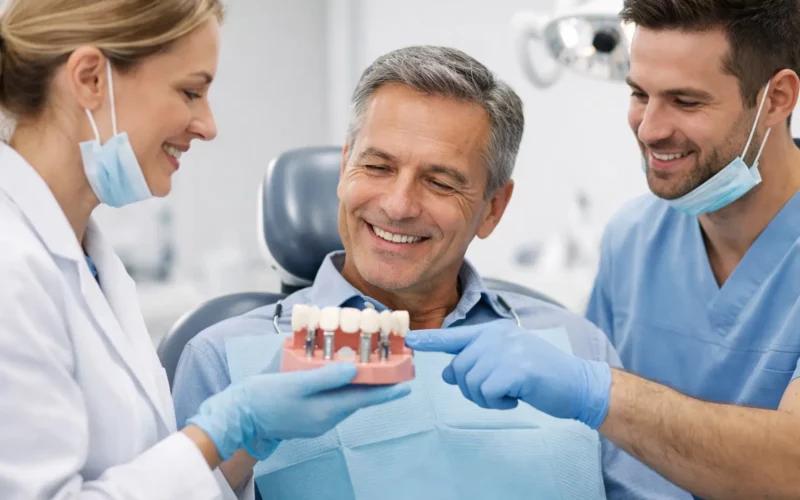
The principle is simple: a complete fixed dental bridge is supported by 4 implants strategically inserted into an arch. Instead of replacing each tooth with an individual implant, the doctor uses four implants that serve as the foundation for the entire fixed prosthesis.
Two implants are typically placed in the front area, where the bone is often better preserved. The other two are tilted posteriorly to provide good stability and to avoid sensitive anatomical structures or the need for more extensive additional procedures. This specific positioning is what makes the All-on-4 system different from a classic implant-supported bridge.
For the patient, the main benefit is clear: you get a fixed set of teeth with fewer implants and, in many cases, in less time than with other complex treatment plans.
Why it is different from classic implants
With classic treatment, the loss of multiple teeth may require a higher number of implants, bone grafting, and several separate stages. All-on-4 reduces this complexity in the right situations. It is not a "simpler" solution in the superficial sense of the word, but rather one that is better optimized for specific cases.
This does not mean it is suitable for everyone. There are patients for whom other options are recommended, such as more implants or other types of fixed rehabilitation. The difference is determined only after investigations, a clinical examination, and an evaluation of bone volume.
Who is the treatment suitable for
All-on-4 is especially recommended for people who have lost all their teeth on an arch, those who have a few remaining compromised teeth, or patients who wear removable dentures and want a fixed alternative. It is also an option frequently considered when existing teeth can no longer be predictably restored in the long term.
Conversely, if there are untreated infections, periodontal issues active or certain habits that may compromise implants, the plan must be adjusted. Smokers can also benefit from implants, but the risks and recommendations must be discussed openly. In implantology, good results come from a proper plan, not from quick promises.
How the treatment works, step by step
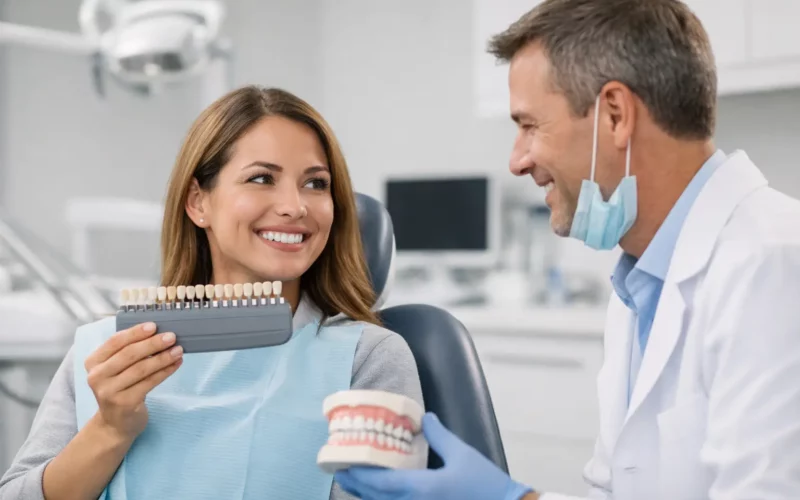
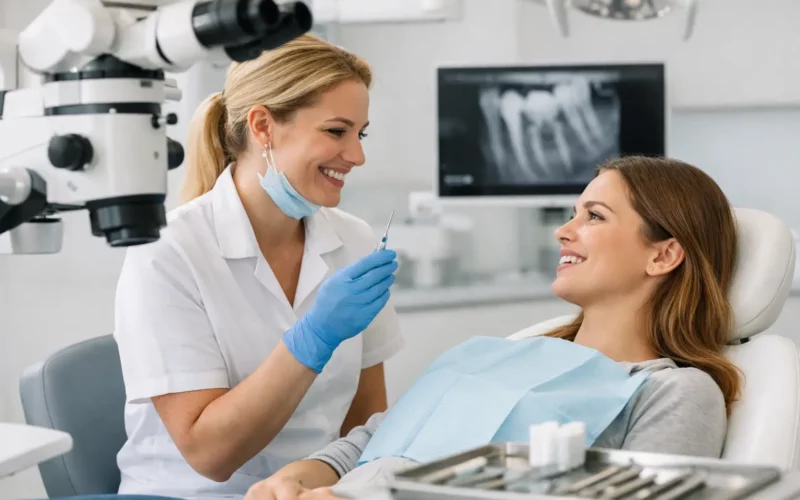
The first stage is the comprehensive consultation. The doctor analyzes the general condition of the oral cavity, performs the necessary imaging investigations, and determines whether the existing bone allows for the insertion of implants in the correct positions. This is also when the patient's expectations, the shape of the future teeth, the color, and the type of restoration are discussed.
If there are compromised teeth that need to be extracted, this is integrated into the plan. On the day of the procedure, the necessary extractions are performed, the area is prepared, and the four implants are inserted. The procedure is performed under local anesthesia, and depending on the case, it can be supplemented with additional comfort control methods.
After the implants are inserted, in many situations, a temporary restoration can be fixed on the same day or within a very short interval. This is one of the reasons why the method is so highly regarded. The patient does not leave without teeth, but with a fixed temporary solution that allows them to resume their social life much faster.
The final restoration is created after the healing and osseointegration period, once the implants have stabilized in the bone. Then, the final version is applied, designed for long-term strength, functionality, and aesthetics.
How long the treatment takes
The intervention itself can take a few hours for one arch, depending on the complexity of the case. However, the complete treatment is not limited to the day of implantation. The total period includes healing, check-ups, and the creation of the final restoration.
As a rule, the patient receives a fixed temporary denture quite quickly, and the final restoration is applied after a few months. The exact interval varies from one case to another. Bone quality, individual healing, and adherence to post-operative recommendations directly influence this timeline.
Is the procedure painful?
This is one of the most frequent questions, and most of the time, the fear is greater than the actual discomfort. During the procedure, local anesthesia controls the pain. After the procedure, inflammation, sensitivity, and moderate discomfort may occur, especially in the first few days, but these are managed through the recommended medication and by following the doctor's instructions.
Recovery is not identical for all patients. Some feel well very quickly, while others need a few extra days to return to their usual routine. The important thing is that, in general, the discomfort is temporary, and the long-term benefit is significant.
What are the advantages of All-on-4
The biggest advantage is stability. Compared to a removable denture, a fixed restoration on implants offers a sensation much closer to natural teeth. It does not move, does not require adhesives, and provides more confidence when eating or speaking.
Another important advantage is time. For many patients, the fact that they can receive temporary fixed teeth quickly completely changes the treatment experience. Equally important is the fact that, in the right cases, the need for additional, more complex interventions can be avoided or reduced.
There is also the aesthetic advantage. A well-planned restoration means more than just white teeth; it means correct proportions, lip support, a balanced smile, and a more rested overall facial appearance.
Are there any limitations or drawbacks?
Yes, and an informed patient should be aware of them. All-on-4 is not a universal solution. If bone density is very low or there are significant anatomical particularities, other options may be necessary.
Also, the temporary restoration requires care. During the healing period, your diet must be adapted. Even though the teeth are fixed, the implants need time to integrate. If the patient puts pressure on them too soon, the risk of complications increases.
There is also the aspect of maintenance. The fact that the restoration is fixed does not mean it no longer requires careful hygiene and periodic check-ups. Implants can have a very long lifespan, but their success also depends on daily care.
How much does All-on-4 cost
The cost varies depending on several factors: the necessary investigations, extractions, the type of temporary restoration, the materials chosen for the final restoration, and the clinical complexity of each case. That is why an accurate price cannot be determined without a consultation.
For patients, the question about cost is natural. However, it is useful to view the treatment as a complete rehabilitation, not just the insertion of four implants. The cost includes planning, the surgical procedure, the prosthetic work, and monitoring your progress.
When comparing options, it is worth looking not only at the initial price but also at predictability, comfort, and aesthetic results. A cheaper solution that is unstable or uncomfortable may end up costing more in the long run.
How to care for the restoration after treatment
Hygiene remains essential. Even though the teeth are not natural, the area around the implants and the gums must be cleaned correctly. Your doctor will show you which toothbrushes, water flossers, or other cleaning tools are suitable for your restoration.
In addition to home hygiene, regular check-ups are mandatory. These visits allow for the verification of implant stability, the fit of the restoration, and the health of the surrounding tissues. Small problems, when caught in time, are much easier to manage.
What results can you expect to achieve
If the treatment is well-indicated and correctly executed, the results can be remarkable. The patient regains chewing function, stability, and the confidence to smile naturally. In many cases, the change is visible not only in the oral cavity but also in facial expression and the way the person speaks and socializes.
At Art Dental Studio, complete rehabilitation plans are built around a simple goal: to restore a functional, aesthetic, and comfortable set of teeth for the patient in a safe and predictable way. If you are wondering if All-on-4 is the right solution for you, the real answer begins with a careful evaluation, not assumptions.
When you have delayed treatment for too long, the problem does not go away. Schedule an appointment to find out what your options are, and if you want a fixed, stable, and natural-looking set of teeth, now is the time to receive a clear and accurate plan for your smile.