How a dental implant is performed, step by step

When a tooth is missing, the problem is more than just aesthetic. Chewing becomes more difficult, adjacent teeth can shift, and the bone in that area begins to resorb over time. That is why many patients want a clear understanding of how dental implants are done, how long they take, and what to expect from the first consultation to the final tooth.
A dental implant is more than just "a screw placed in the bone." It is a carefully planned, multi-stage treatment designed to ensure the result is stable, functional, and as close as possible to the look of a natural tooth. For patients seeking a modern and durable solution, implants remain one of the best options for dental restoration.
How a dental implant is properly performed
The procedure always begins with a patient evaluation. During this stage, the doctor analyzes the general condition of the oral cavity, checks the available bone, the position of neighboring teeth, and the bite. Imaging tests are usually required to see exactly if there is enough bone and where the implant can be safely placed.
This brings us to an important point: not all patients have the same treatment plan. Sometimes an implant can be placed quickly, while other times it is necessary to first treat an infection, extract a compromised tooth, or perform a bone graft. This is precisely why the correct answer to the question "how is a dental implant done?" is: it depends on each patient's clinical situation.
Stage 1 – Consultation and treatment plan
The first consultation is when the actual steps of the treatment are established. The doctor discusses your dental history, symptoms, expectations, and possible outcomes. Additionally, they check that your gums are healthy and identify any issues that need to be addressed before the implant.
This stage also covers costs, treatment duration, and the final restoration option. Some patients need a single implant, while others require more extensive rehabilitation with multiple implants and complex prosthetic work. A well-crafted plan reduces the risk of complications and provides predictability.
Stage 2 – Preparing the implant site
If there is still a tooth in that spot that cannot be saved, an extraction is performed. In certain cases, the implant can be placed immediately after the extraction. In other situations, it is safer to wait for the area to heal completely.
When there is insufficient bone, it may be necessary to perform bone grafting. This is not a complication, but a common preparatory step in implantology. The goal is simple: the implant needs good bone support to last in the long term. If this step is skipped when necessary, the result may be compromised.
Stage 3 – Dental implant placement
This is the stage that concerns patients the most, although in practice, it is better tolerated than many expect. The procedure is performed under local anesthesia, so the patient does not feel pain during the intervention.
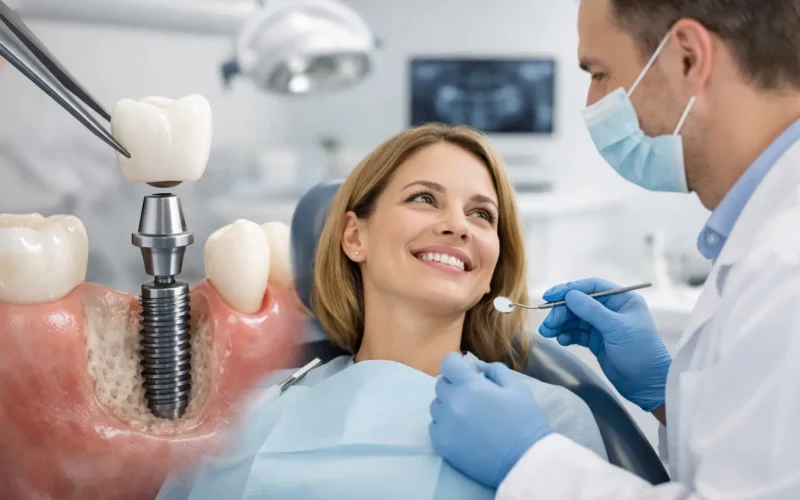
The doctor prepares the site in the bone and inserts the dental implant, which is typically made of titanium or modern biocompatible materials. Once inserted, the area is protected according to the established plan. Depending on the case, the implant may remain under the gum for healing or may be fitted with a temporary component.
The procedure itself does not take very long for a single implant. However, the exact time varies depending on the complexity of the case, the position of the tooth, and the need for additional procedures. For one patient, it may be a simple, short procedure. For another, it may be part of a more extensive treatment.
Does a dental implant hurt?
During the procedure, local anesthesia manages the pain. After the intervention, it is normal to experience mild to moderate discomfort, sensitivity, and sometimes minor local swelling. These symptoms are generally temporary and can be managed with the recommendations provided by your doctor.
Many patients say after the procedure that they expected it to be much more difficult. As a rule, the discomfort is comparable to or even less than that of complicated tooth extractions.
Stage 4 – Healing and osseointegration
Following insertion, an essential stage begins: osseointegration. This is the process by which the implant biologically fuses with the bone. Without this stage, the implant cannot safely support the final dental crown.
The healing period varies from case to case, but it usually takes a few months. Factors such as bone quality, the area where the implant was placed, oral hygiene, and adherence to post-operative instructions all play a role. Smoking, poor hygiene, or putting pressure on the implant too soon can negatively affect healing.
This is the part where patience makes all the difference. Many patients want the final result as quickly as possible, which is natural. However, in implantology, rushing is not always an advantage. A well-integrated implant is more valuable than a treatment performed too quickly.
Stage 5 – Attaching the abutment and the dental crown
After healing, the implant is ready for the final restoration. The doctor attaches the prosthetic abutment, which is the connecting piece between the implant and the dental crown. The crown is then crafted to match the rest of your teeth both functionally and aesthetically.
The final crown is the stage visible to the patient. It must look good while also allowing for a proper bite. A successful restoration is not defined by artificiality, but by natural appearance, stability, and comfort while chewing.
How long does the entire treatment take?
One of the most common questions relates to time. The short answer is that the treatment can take anywhere from a few months to longer, depending on the complexity. If there is sufficient bone and the situation is favorable, the process is simpler. If extractions, bone grafting, or preliminary treatments are required, the duration increases.
There are situations where a patient can benefit from temporary fixed teeth in a short time, but this does not automatically apply to everyone. The doctor decides based on implant stability, bone condition, and the prosthetic plan.
How much does a dental implantcost?
The cost depends on several factors: the number of implants, the type of implant, the materials used, the complexity of the procedure, the need for additional treatments, and the type of final crown. Therefore, an accurate price cannot be determined without a consultation.
Patients often look for a quick answer regarding cost, which is natural. However, in implantology, it is most useful to view the cost in the context of the entire treatment. A well-crafted plan, using premium materials and modern technology, means better chances for a stable and aesthetic long-term result.
Who is a candidate for a dental implant?
In general, a dental implant is a good option for patients who have lost one or more teeth and have an oral condition that allows for treatment. It is important that the gums are healthy or treated beforehand, and that there is sufficient bone or that it is reconstructed when necessary.
There are also situations that require caution. Active infections, poor hygiene, or delaying necessary treatments can reduce the chances of success. That is why a proper evaluation is more important than the promise of a quick fix.
How does the implant feel after completion?
A well-integrated and correctly restored implant provides a sensation very close to that of a natural tooth. Patients can chew better, speak more comfortably, and get rid of the insecurity associated with missing teeth or unstable dental work.
The biggest difference is seen in everyday life. It is not just about appearance, but about real comfort. When you can eat without worry and smile without hiding, the treatment truly proves its value.
What to do after an implant
Caring for an implant is not complicated, but it must be taken seriously. Daily oral hygiene, regular check-ups, and professional cleanings are essential. An implant cannot get cavities, but the tissues around it can suffer if hygiene is neglected.
It is also important to follow the post-procedure recommendations exactly. The first few days are crucial for healing. Diet, local hygiene, and avoiding excessive pressure on the treated area are all part of the treatment's success.
For patients looking for a modern clinic in Satu Mare, the medical team's experience, careful planning, and the technology used make the difference between an improvised treatment and a predictable one. At Art Dental Studio, the focus is on complete solutions, clear explanations, and results that look good and function correctly.
If you are wondering how a dental implant is performed and whether it is the right choice for you, the best step is a proper assessment, not guesswork. Book an appointment to find out which option suits you best, because a well-restored smile always begins with a well-made plan.