Dental veneers in Satu Mare – how to choose

A great-looking smile isn't just about the color of your teeth. It’s about the shape, proportions, position, and how they harmonize with your facial features. That is precisely why more and more patients looking for dental veneers in Satu Mare want to understand not just what the final result looks like, but also whether the treatment is truly right for them.
Dental veneers are a modern aesthetic solution for correcting visible imperfections in the front teeth. They can improve color, shape, size, or minor alignment issues without completely changing the structure of your teeth. For many patients, this is the treatment that makes the difference between an acceptable smile and one they can show off with confidence.
When are dental veneers recommended in Satu Mare
Veneers aren't the first option for every dental problem. They are recommended primarily when the teeth are healthy or can be brought to a stable state, and the main goal is aesthetic.
In practice, veneers may be suitable if you have stained teeth that no longer respond well to whitening, chipped edges, small gaps between teeth, uneven shapes, or an generally unbalanced smile. Sometimes, they are also chosen to correct minor rotations or length differences when the patient does not require complex orthodontic treatment.
However, there are situations where your dentist will recommend something else. If you have active cavities, gum inflammation, severe bruxism, or a bite that puts excessive pressure on your front teeth, the right plan starts with treating these issues. Aesthetics come after stabilizing your oral health, not before.
What types of dental veneers are available
The most well-known options are ceramic and composite veneers. The difference between them isn't just about price, but primarily about durability, aesthetics, and how they are made.
Ceramic veneers
Ceramic veneers are preferred when the patient wants a very natural and long-lasting result. Ceramic reflects light in a way that is very similar to natural enamel, and this matters much more than it seems at first glance. Teeth shouldn't just be white; they should look believable.
Another important advantage is their resistance to staining. Coffee, tea, or highly pigmented foods affect the appearance of these veneers less than other materials. Plus, if they are well-made and properly cared for, they can have a very long lifespan.
Composite veneers
Composite veneers can be a suitable option in certain cases, especially when a smaller correction is needed or when the patient is looking for a more affordable alternative. They can sometimes be done faster and with minimal intervention on the tooth.
The trade-off comes in terms of aesthetic stability and long-term durability. Composite material can stain more easily and may require touch-ups or replacement sooner than ceramic. It is not a poor option, but it is a choice that should be made with full information.
How to decide if veneers are right for you
What matters here is less about what you’ve seen in photos and more about what the clinical evaluation reveals. A successful aesthetic treatment doesn't start with the shade, but with an analysis of your smile, bite, and dental health.
The dentist will evaluate your tooth position, enamel thickness, gum health, and bite. Sometimes, a patient comes in convinced they need veneers, only to discover that better results can be achieved through whitening, orthodontics or dental crowns for severely damaged teeth. The right choice depends on the diagnosis, not a fleeting preference.
In a modern clinic, this stage often includes photography, digital impressions, or simulations of the final result. It is one of the most useful parts of the treatment because it realistically establishes what can be achieved and where expectations might need adjusting.
What the dental veneer process looks like in Satu Mare
The procedure isn't complicated, but it must be done with care. The final result depends on every stage, not just the bonding of the veneers.
The first consultation covers your aesthetic goals, a clinical evaluation, and determining if you are a suitable candidate. If there are issues like cavities, tartar, gum inflammation or old, ill-fitting restorations, these must be addressed first.
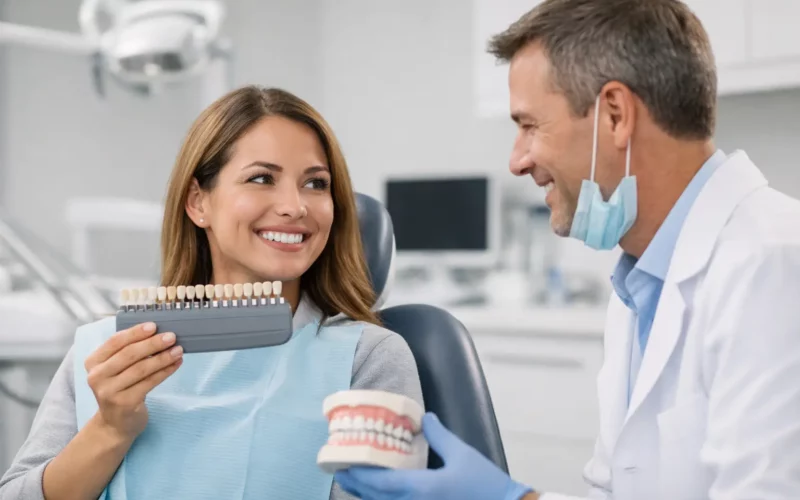
Next comes the aesthetic planning stage. This is where the shape, length, shade, and proportions are decided. For many patients, this is the phase that brings the most clarity. They are no longer choosing a treatment in the abstract; they begin to understand exactly what changes will occur.
Depending on the case, the teeth may require minimal preparation. Not all veneers involve the same intervention, and the amount of enamel removed varies. That is why general promises like "no prep for everyone" should be viewed with caution. It is possible for some patients, but for others, it wouldn't provide the correct result.
After the teeth are prepared, an impression is taken, and the veneers are custom-made. During the final fitting, we check the fit, color, and how they integrate into your smile. Only then are they permanently bonded.
How long the treatment takes and what recovery involves
The duration depends on the complexity of the case and any preparatory treatments. If your teeth and gums are already healthy, the process can be relatively quick, spanning just a few visits. If there are existing restorations to redo or other issues to treat first, the total time will increase.
After application, the adjustment period is generally easy. Some patients may feel slight sensitivity or notice a difference in how their teeth meet during the first few days, but these things usually resolve quickly. It is important to follow your dentist's recommendations and return for a check-up if you notice any persistent discomfort.
Recovery isn't difficult, but it’s not a "set it and forget it" treatment either. Veneers require consistent oral hygiene and regular check-ups.
How much do dental veneers cost
Cost is one of the most common questions, and rightly so. Patients want to know not just the price of a veneer, but the value they receive in return.
The price varies based on the material, the number of teeth treated, the complexity of the planning, and the technology used. Ceramic veneers generally cost more than composite ones, but they offer clear advantages in terms of aesthetics and durability. In many cases, what seems more affordable upfront may require more frequent maintenance later on.
It’s worth looking at the cost within the context of your entire treatment plan. Sometimes, a patient only needs a few veneers on the visible teeth. Other times, a larger number is recommended for a balanced result. There is no one-size-fits-all formula.
At Art Dental Studio, our approach is transparent: first an evaluation, then a plan, and finally a clear cost estimate. Schedule an appointment if you want to find out which option is right for your case.
What results can you realistically expect
Veneers can significantly change the appearance of your smile, but the best results are those that don't look artificial. A successful smile doesn't draw attention through exaggeration, but through balance.
You can expect more uniform, brighter, and better-proportioned teeth. You can achieve a visible correction of front-tooth imperfections and a significant boost in self-confidence. At the same time, the result depends on your initial anatomy, the type of veneers chosen, and how well they are integrated with your facial features.
If you want a very white smile, it’s worth discussing this openly with your dentist. Sometimes, extremely bright shades don't look natural on every skin tone or facial structure. Quality dental aesthetics are about personalization, not imitation.
How to maintain veneers long-term
Care isn't difficult, but it must be consistent. Proper brushing, flossing, and regular check-ups remain essential. A veneer covers the visible part of the tooth, but the tooth and the surrounding gum still need the same level of attention.
It is recommended to avoid habits like opening packages with your teeth, chewing on hard objects, or biting into very hard foods directly with your front teeth, especially if you have multiple veneers. If you grind your teeth at night, your dentist may recommend a protective night guard.
A good aesthetic treatment retains its value when maintained correctly. This means regular check-ups, not just home care.
If you are considering dental veneers and want a clear plan tailored to your smile, the right first step is a consultation. When choices are based on a proper diagnosis, premium materials, and modern technology, the result doesn't just look good in photos—it feels good every single day. Call us now to find out which option suits you best.